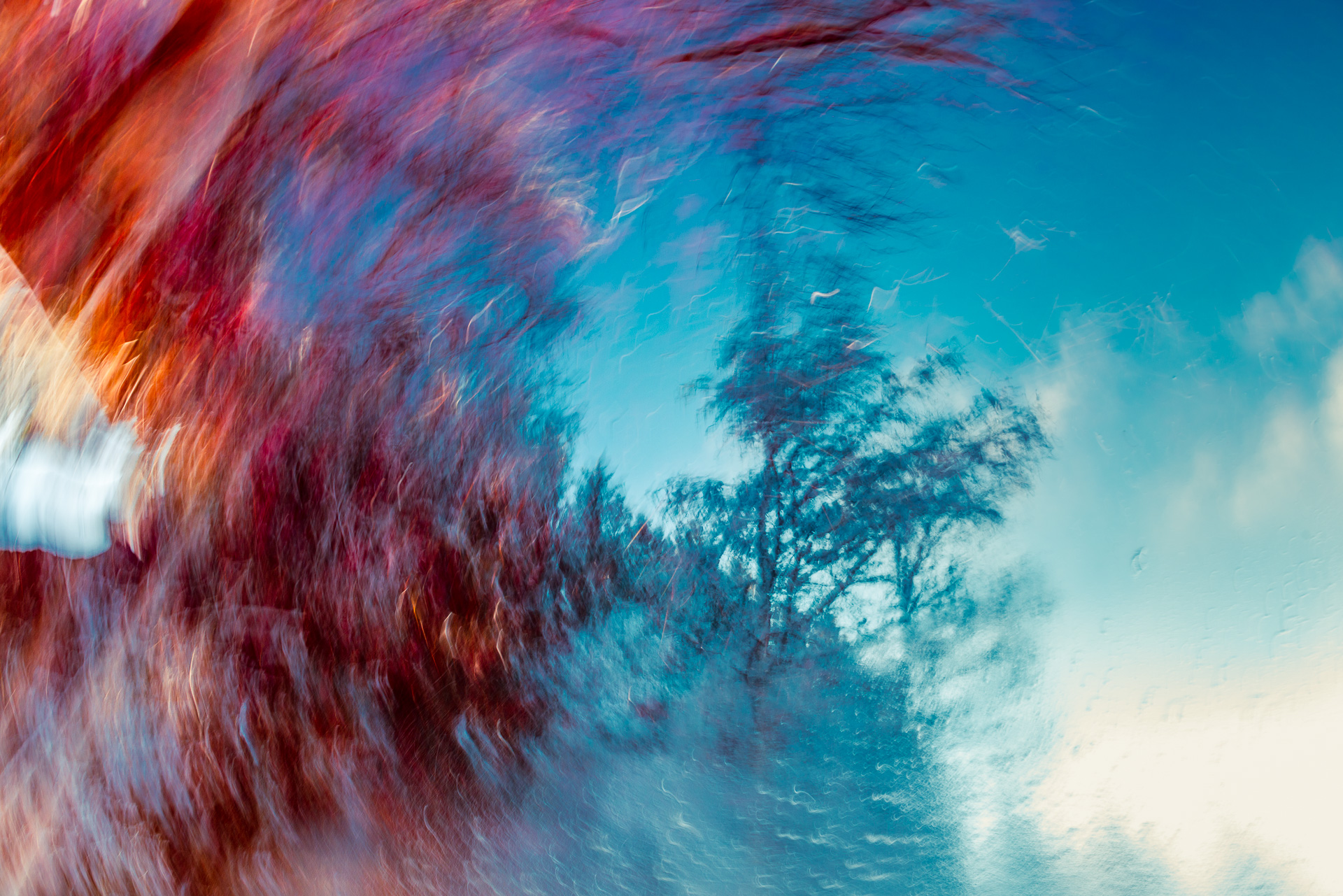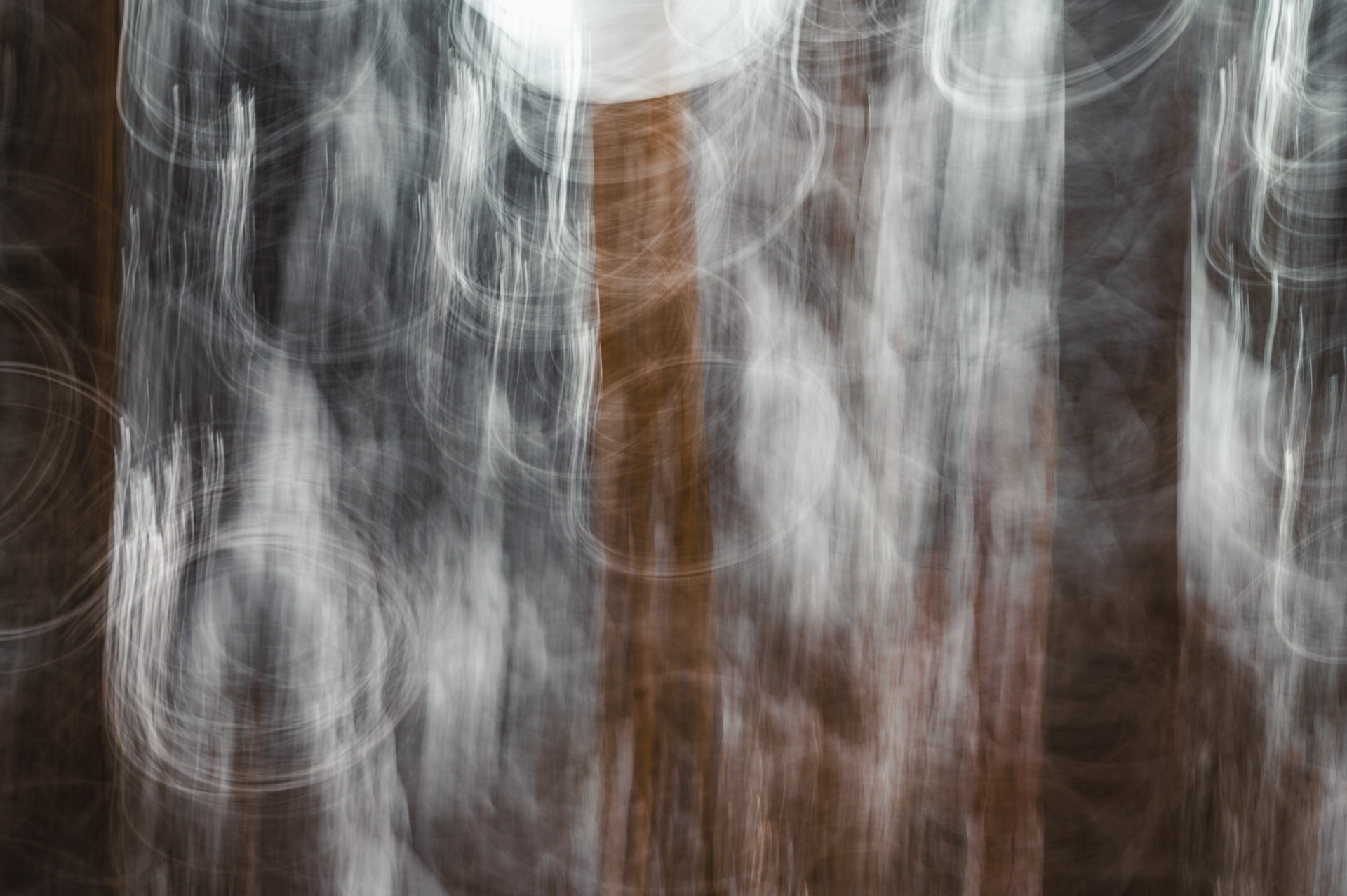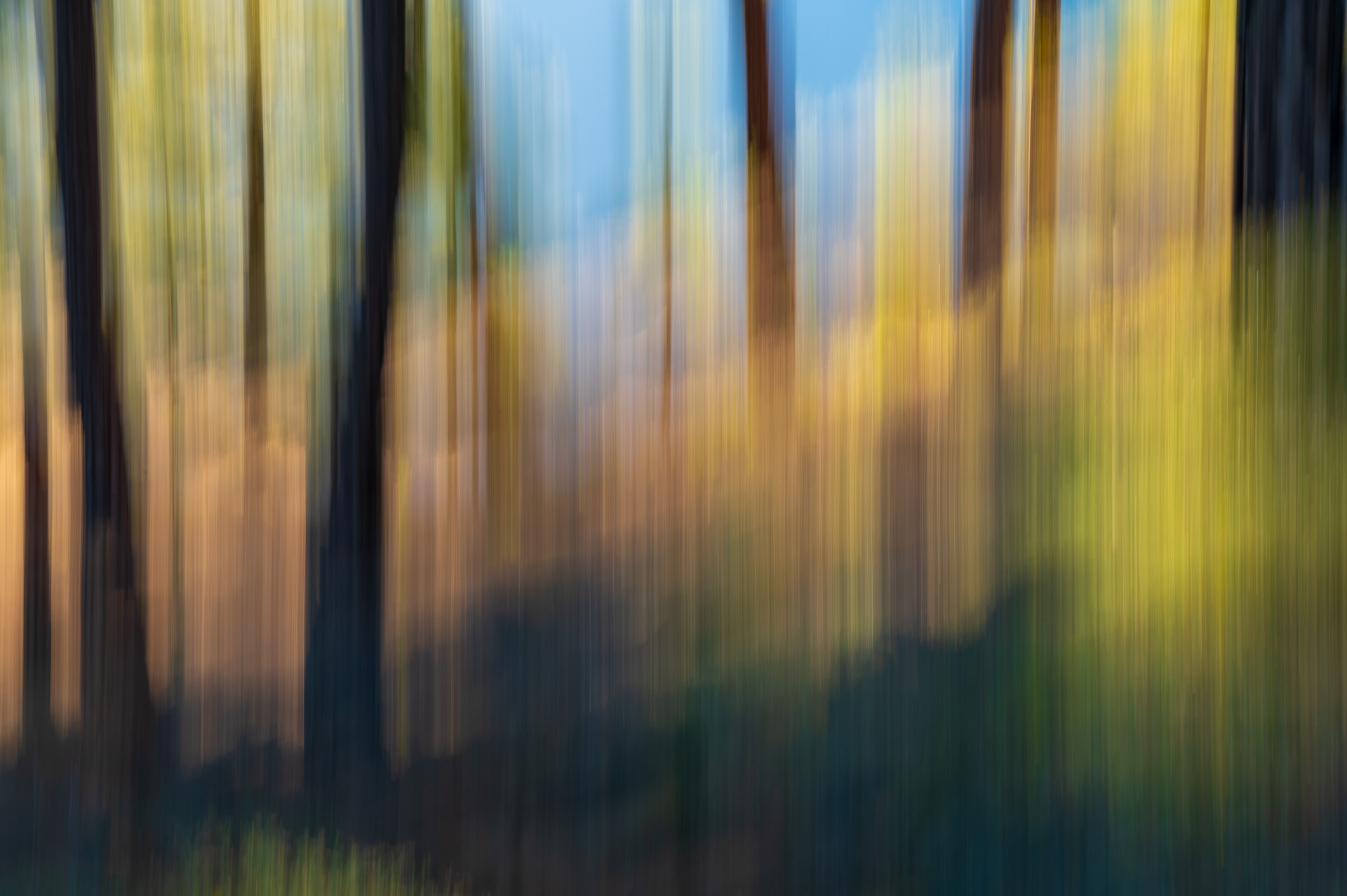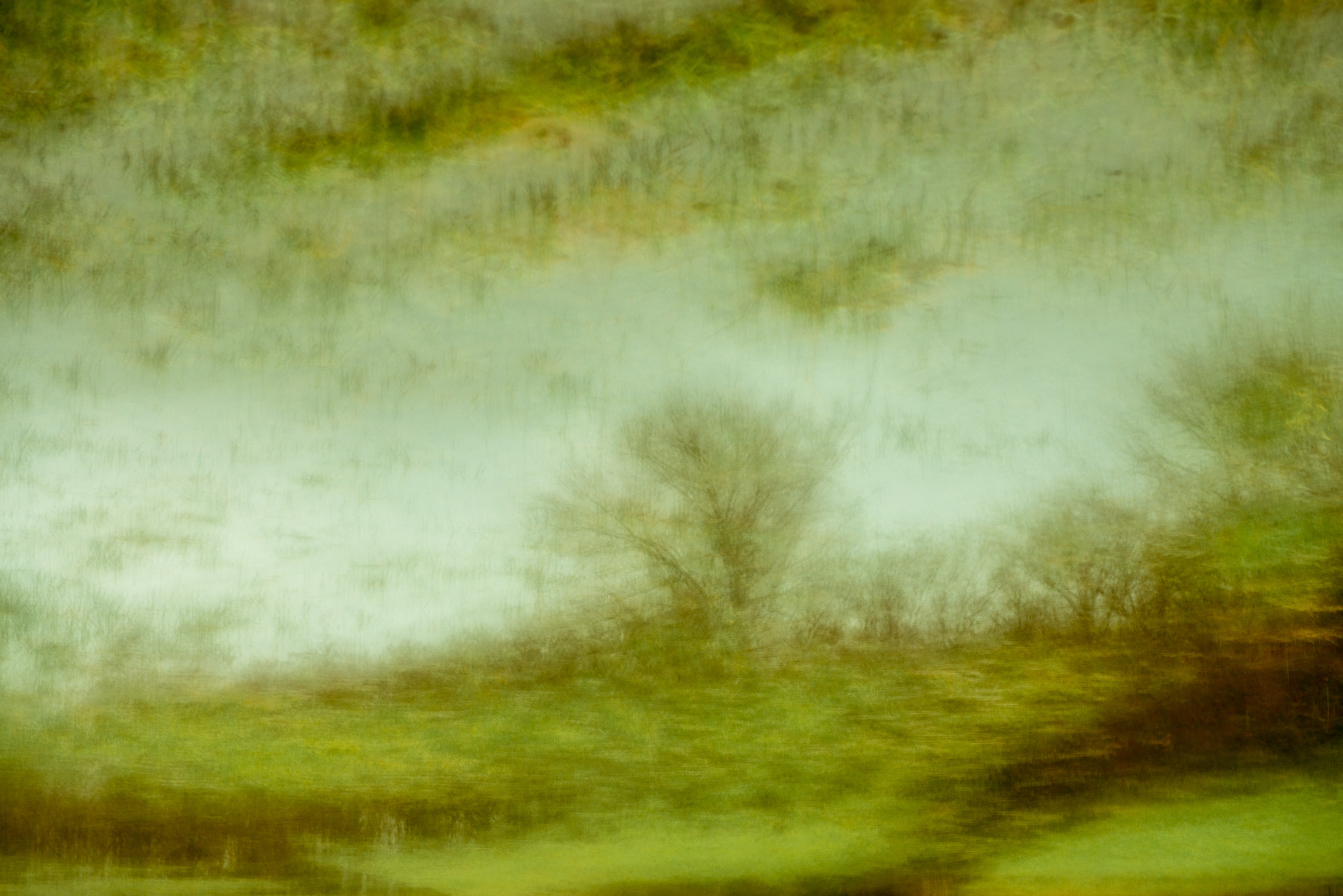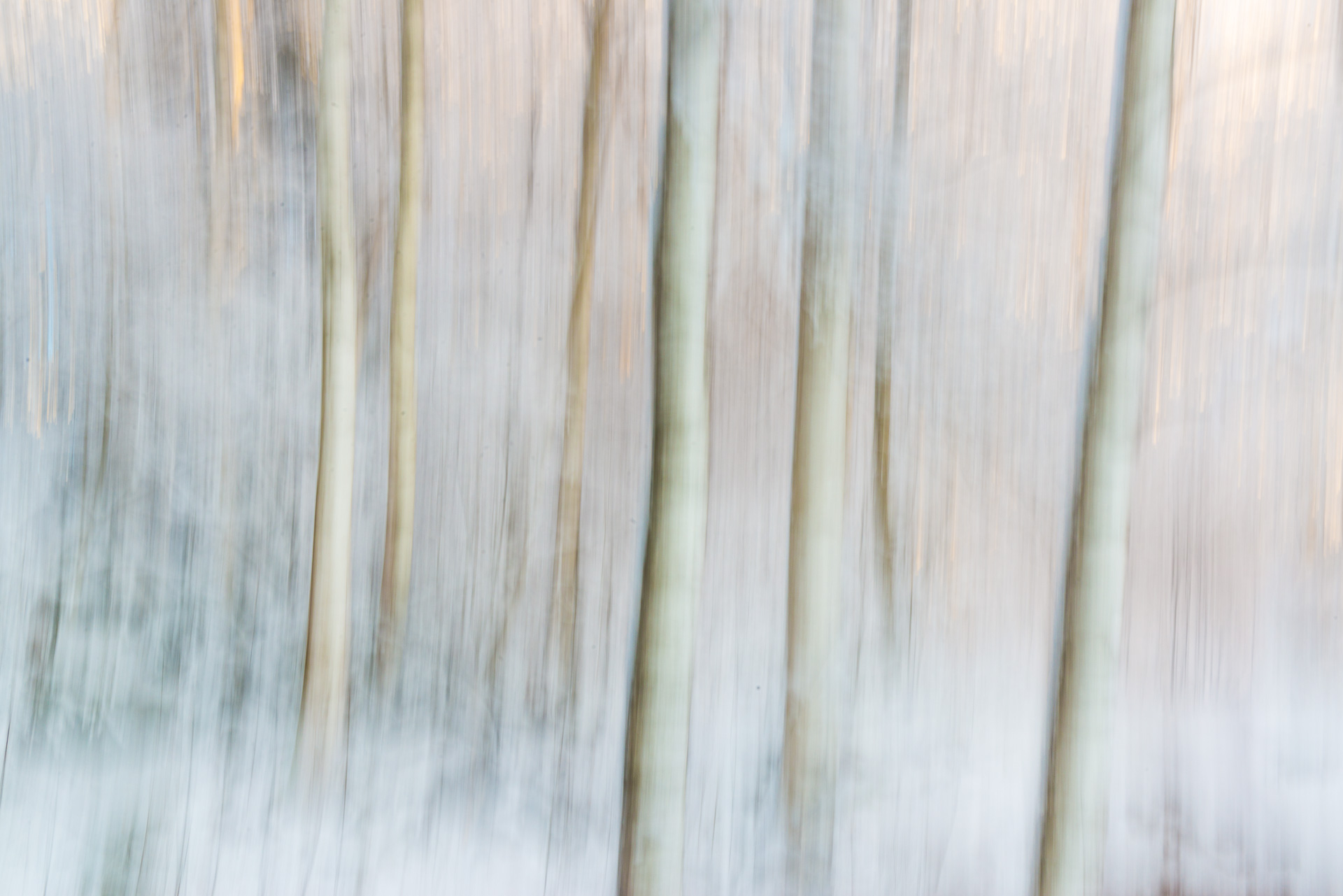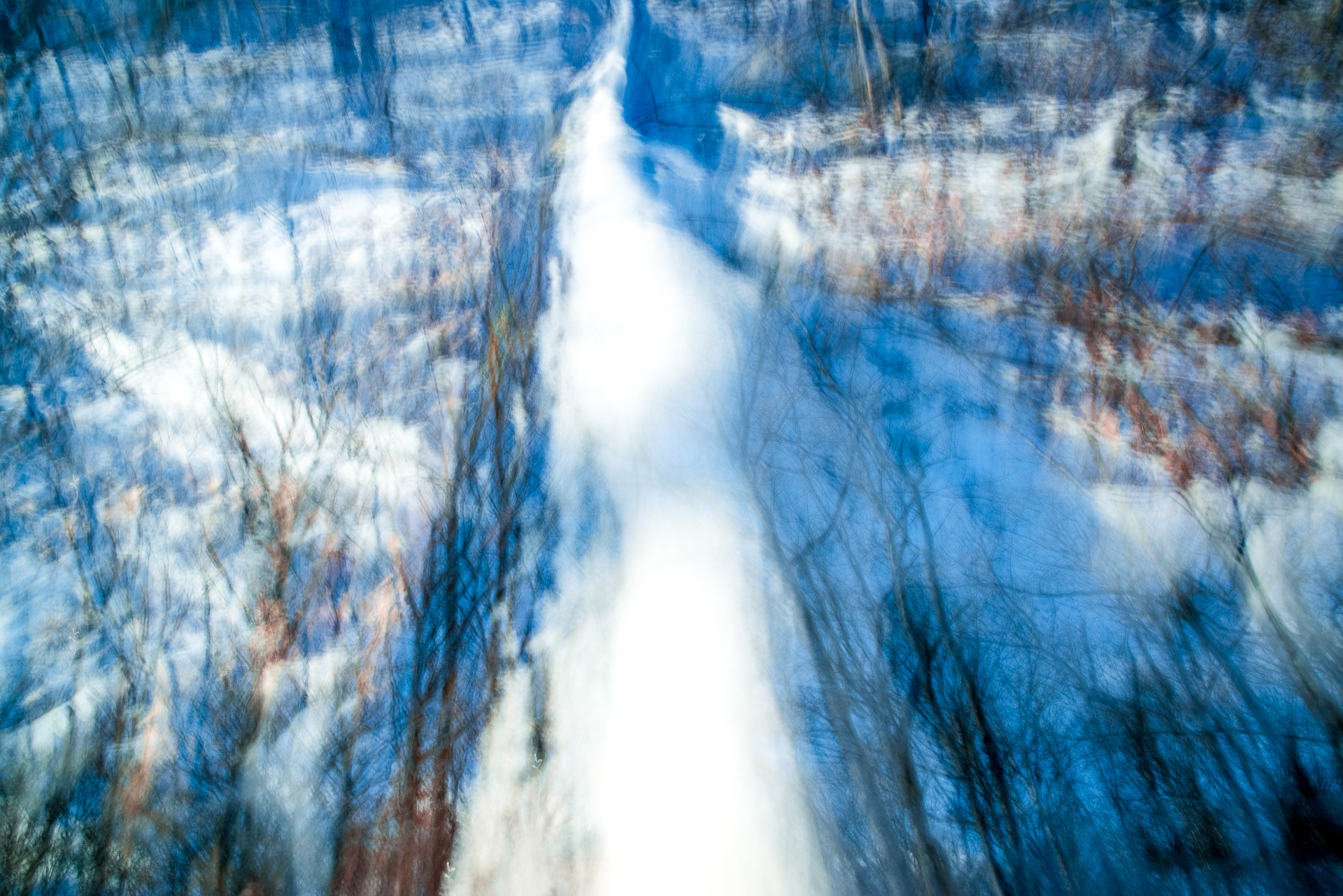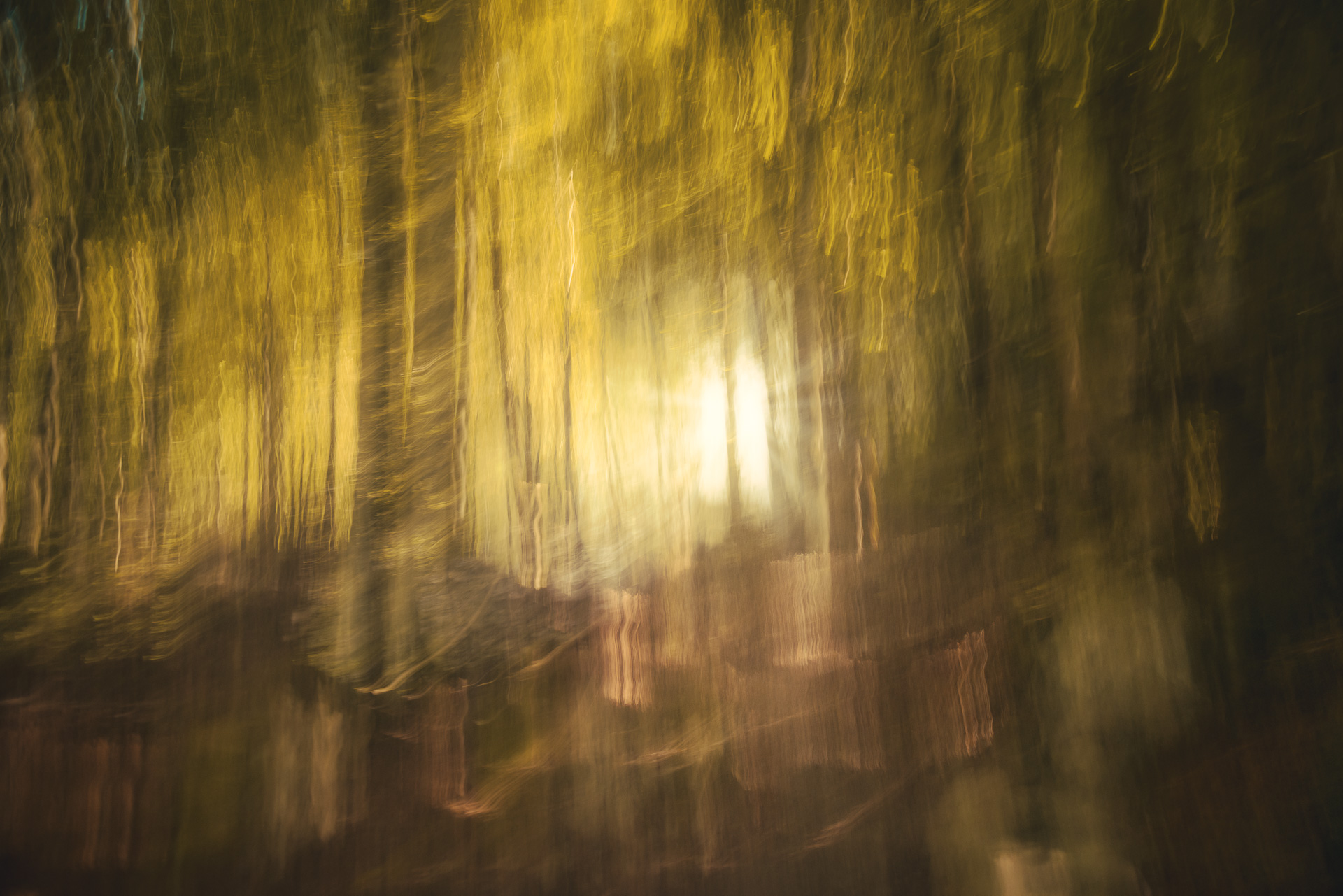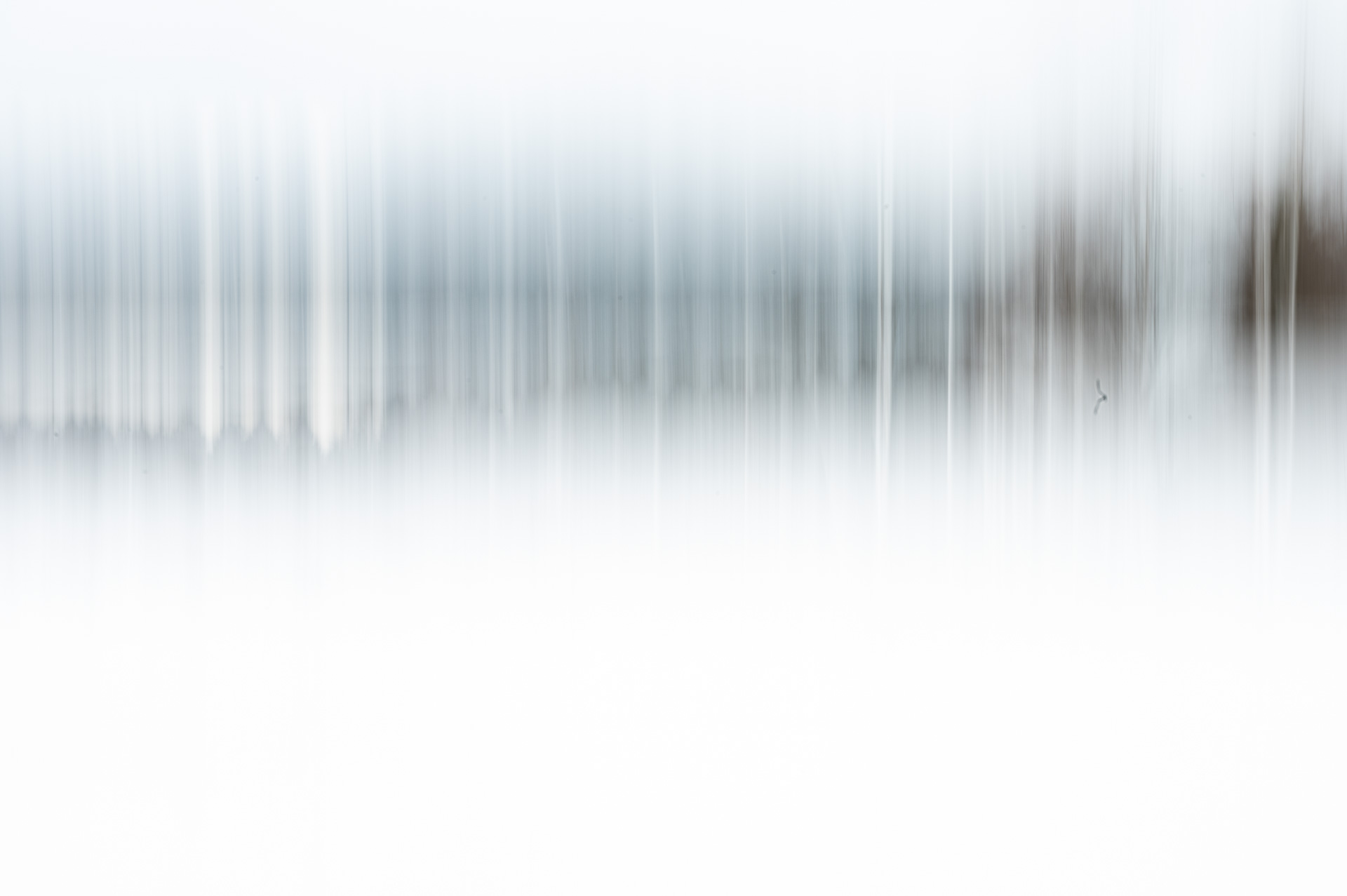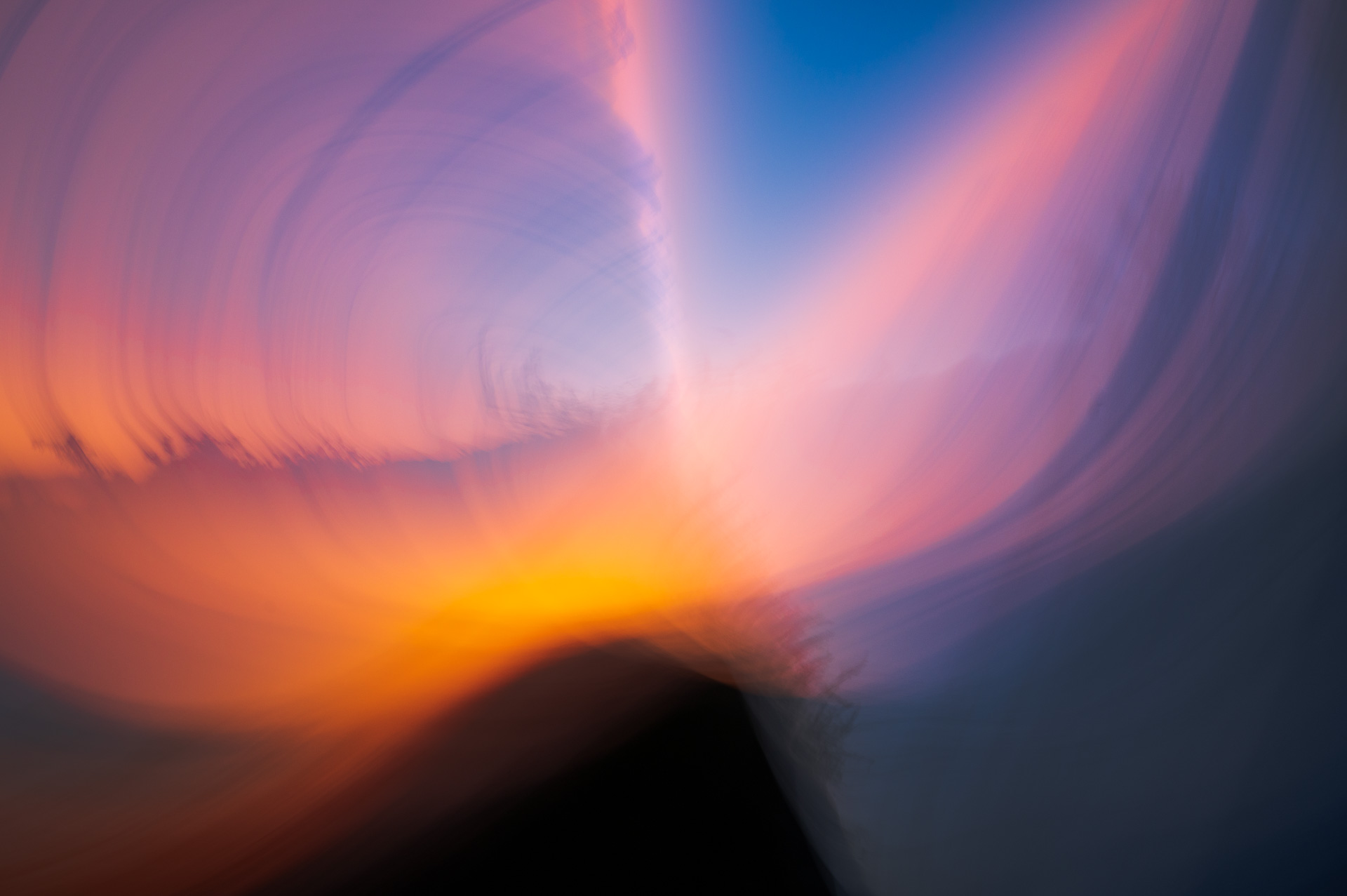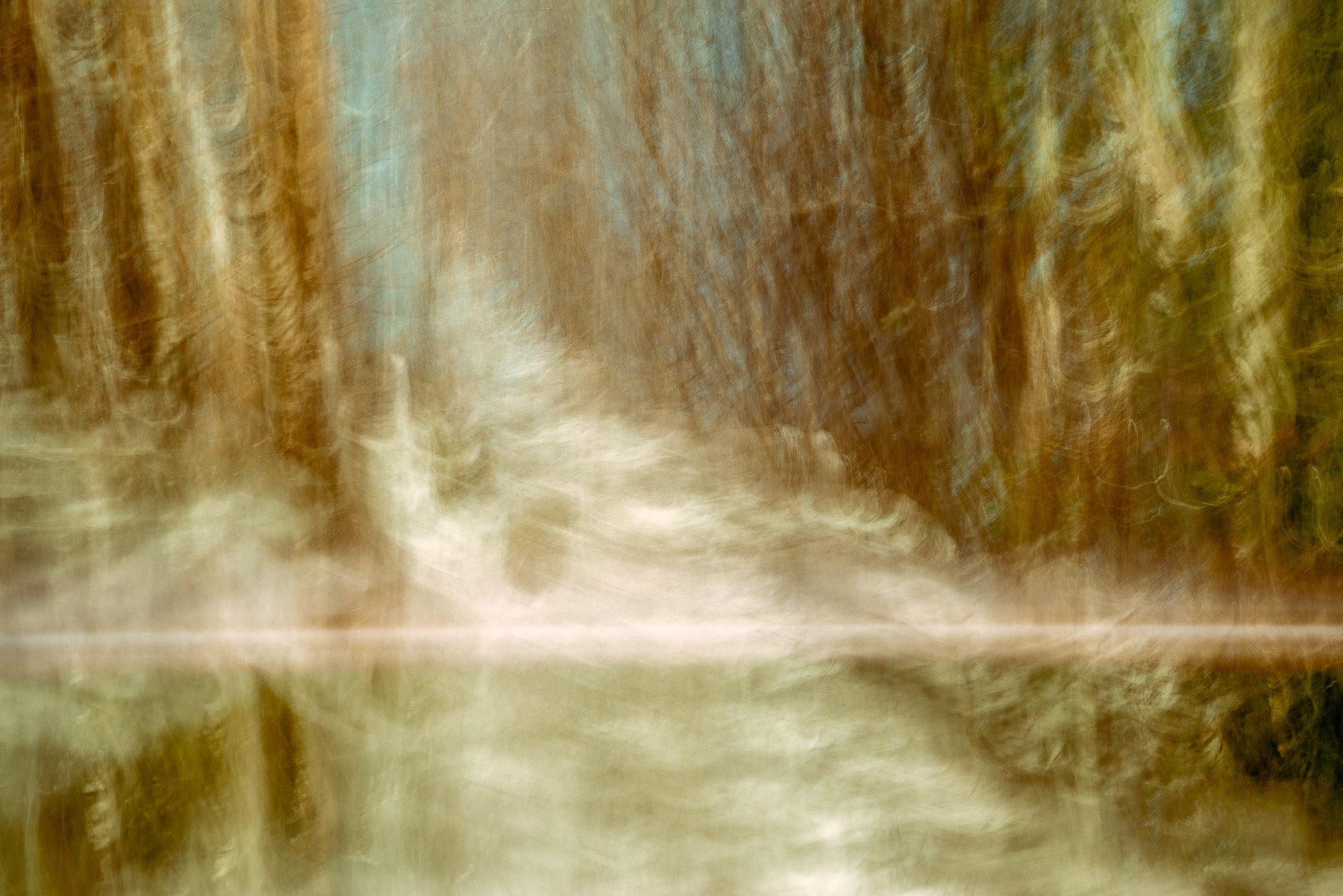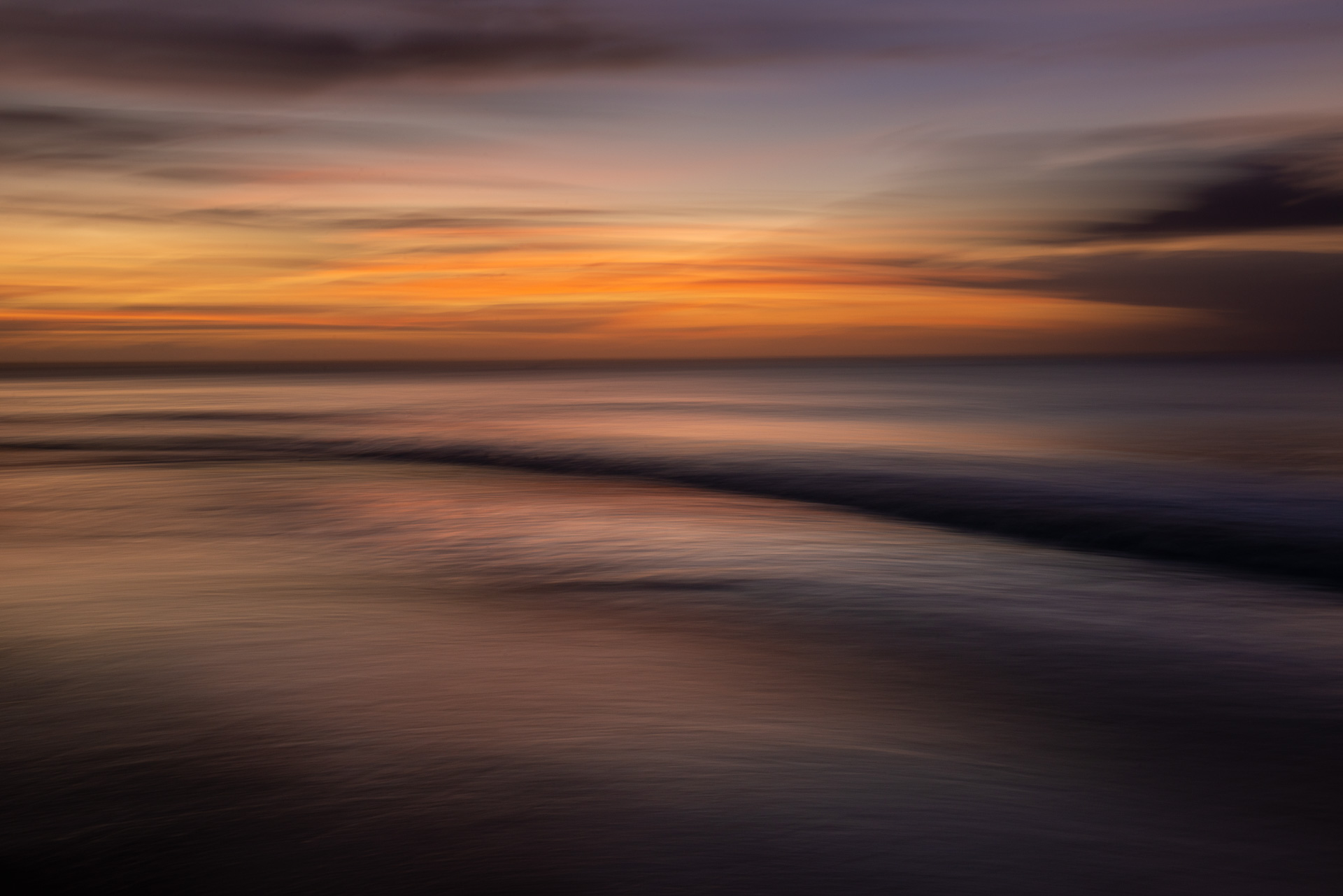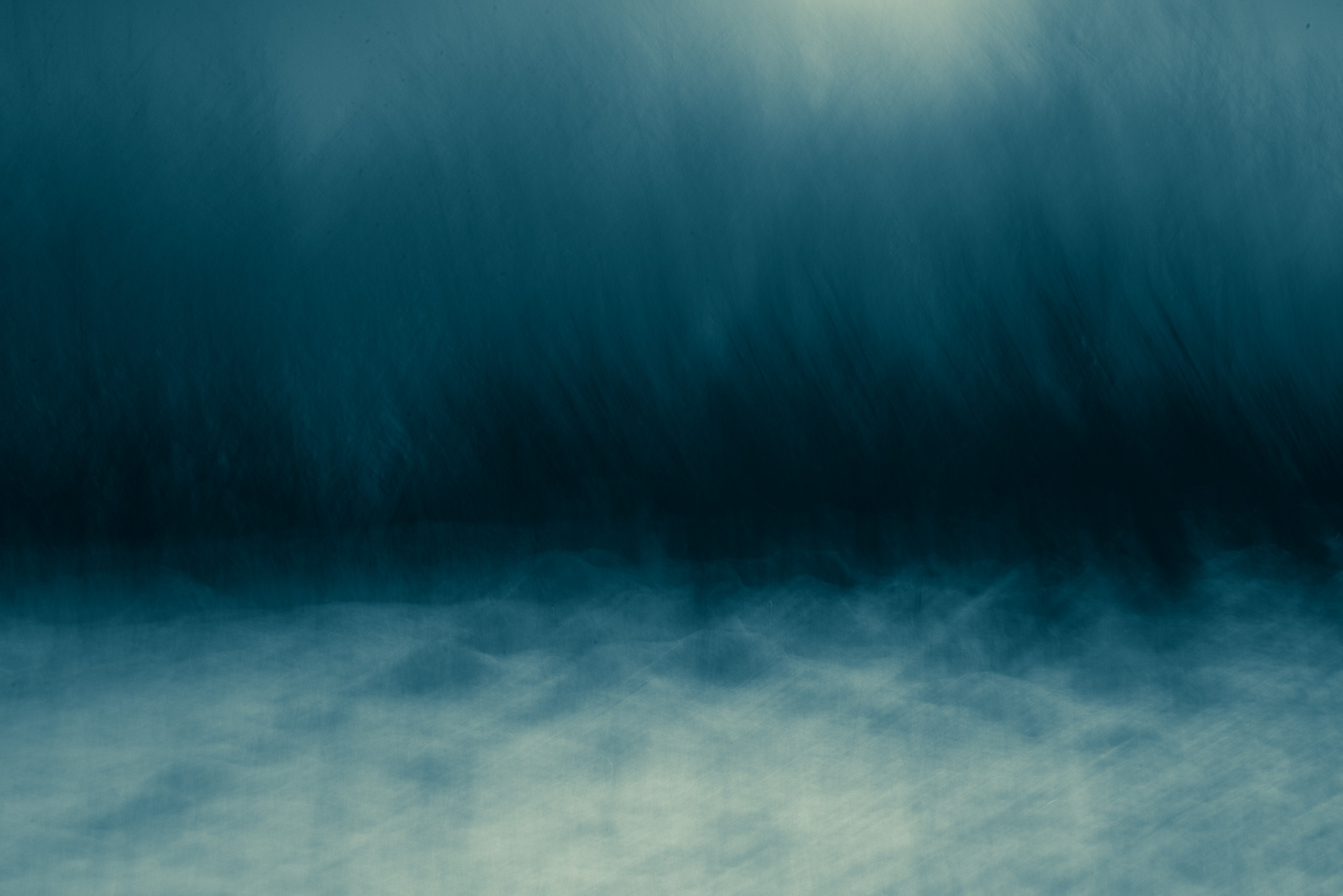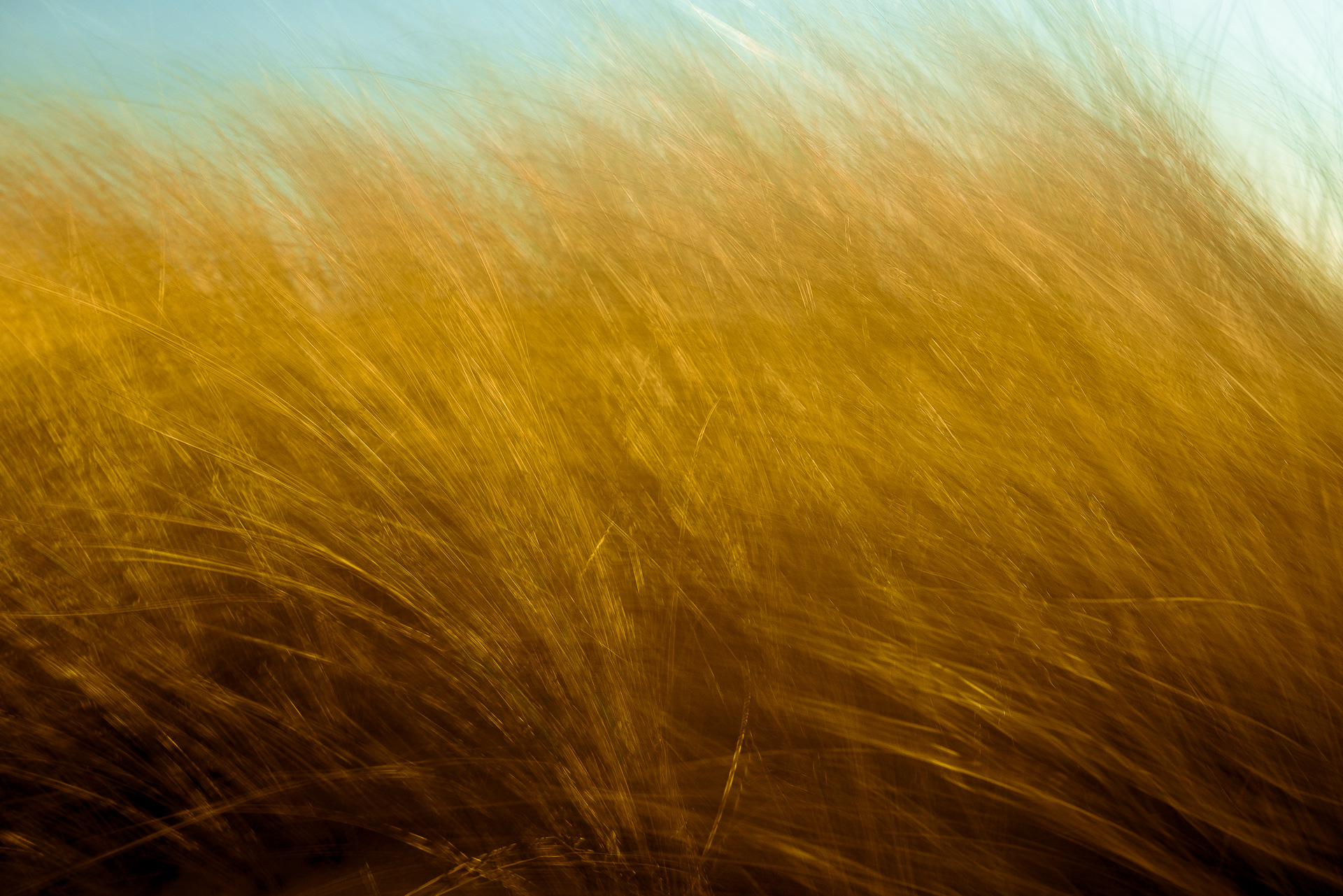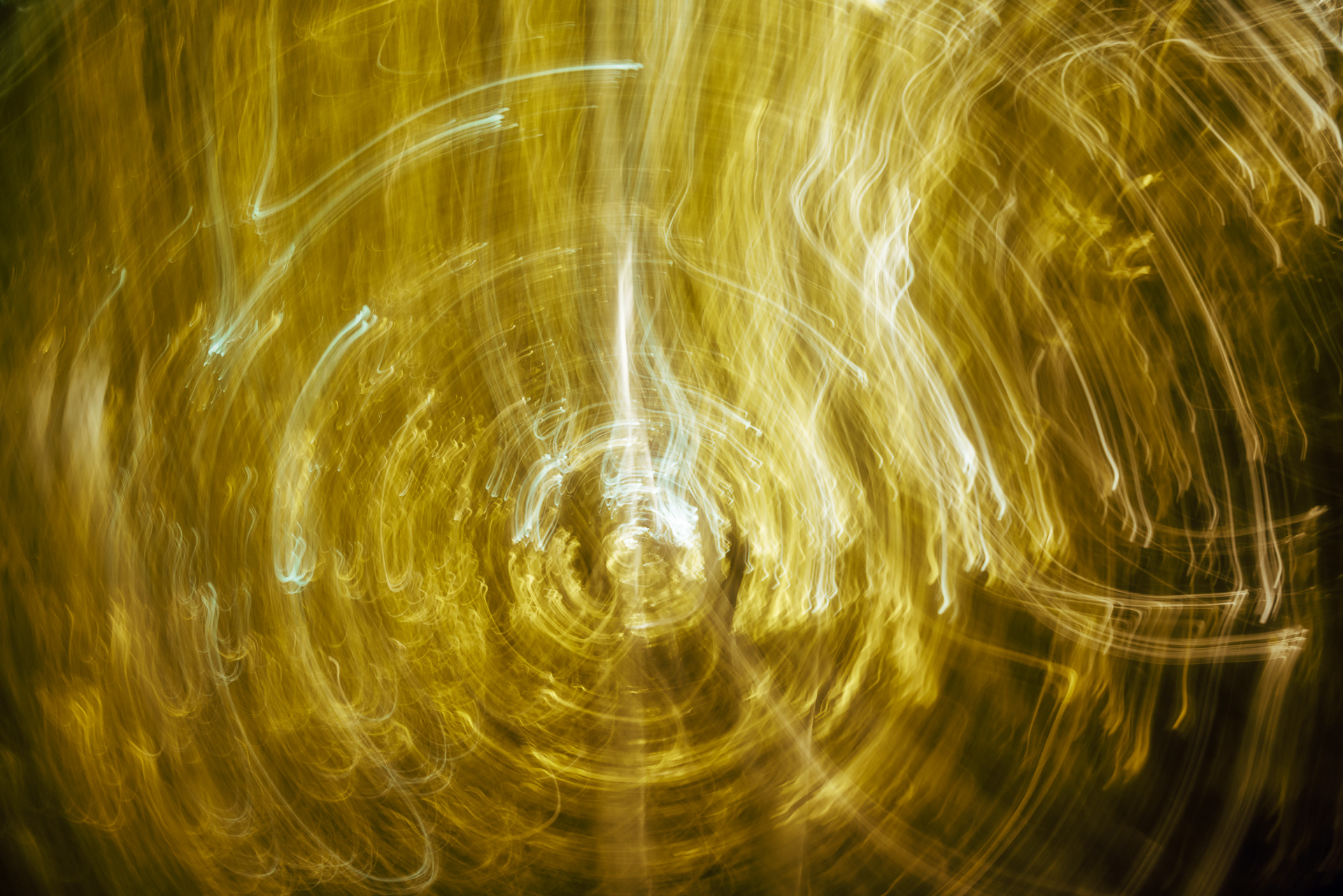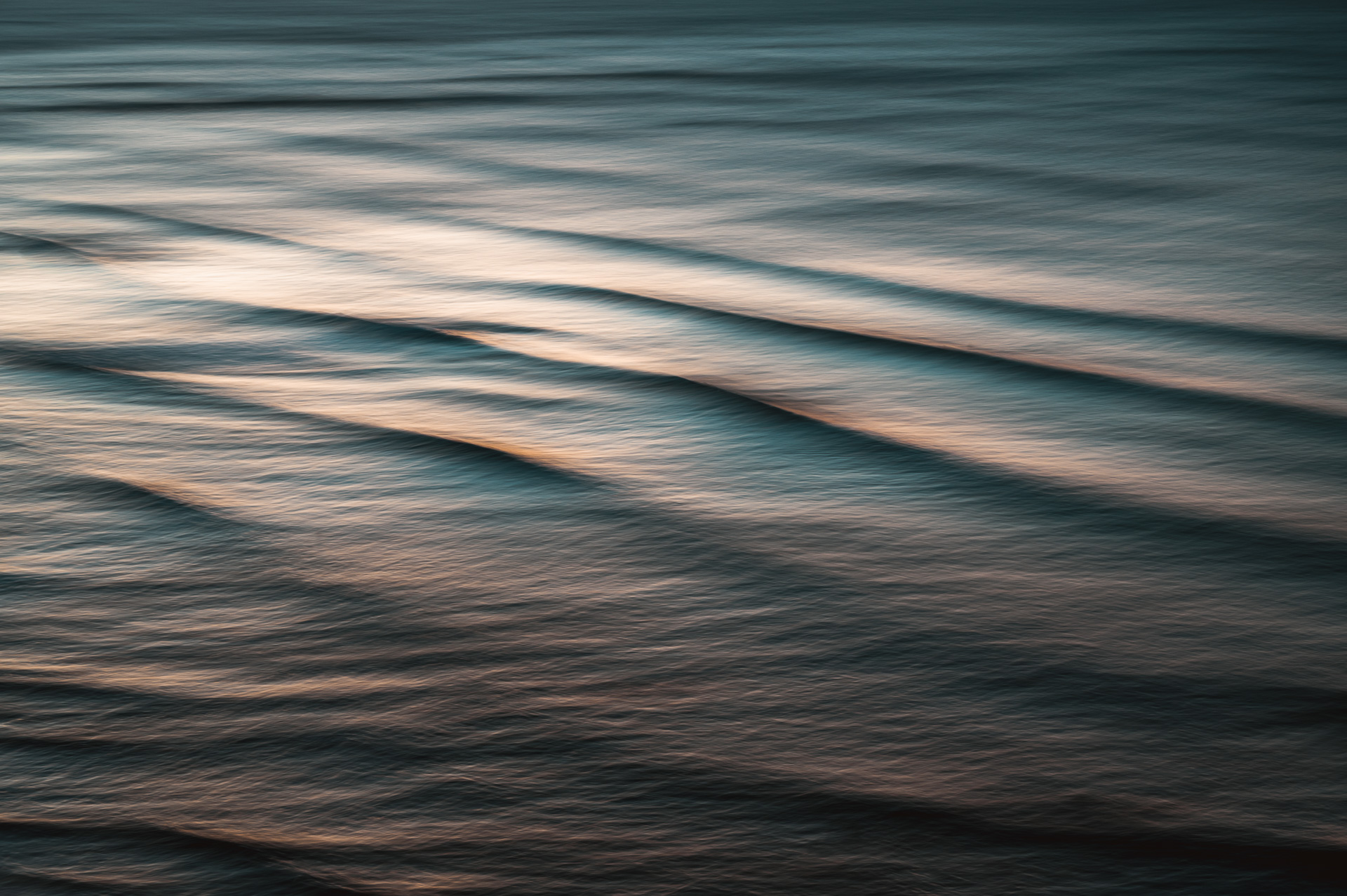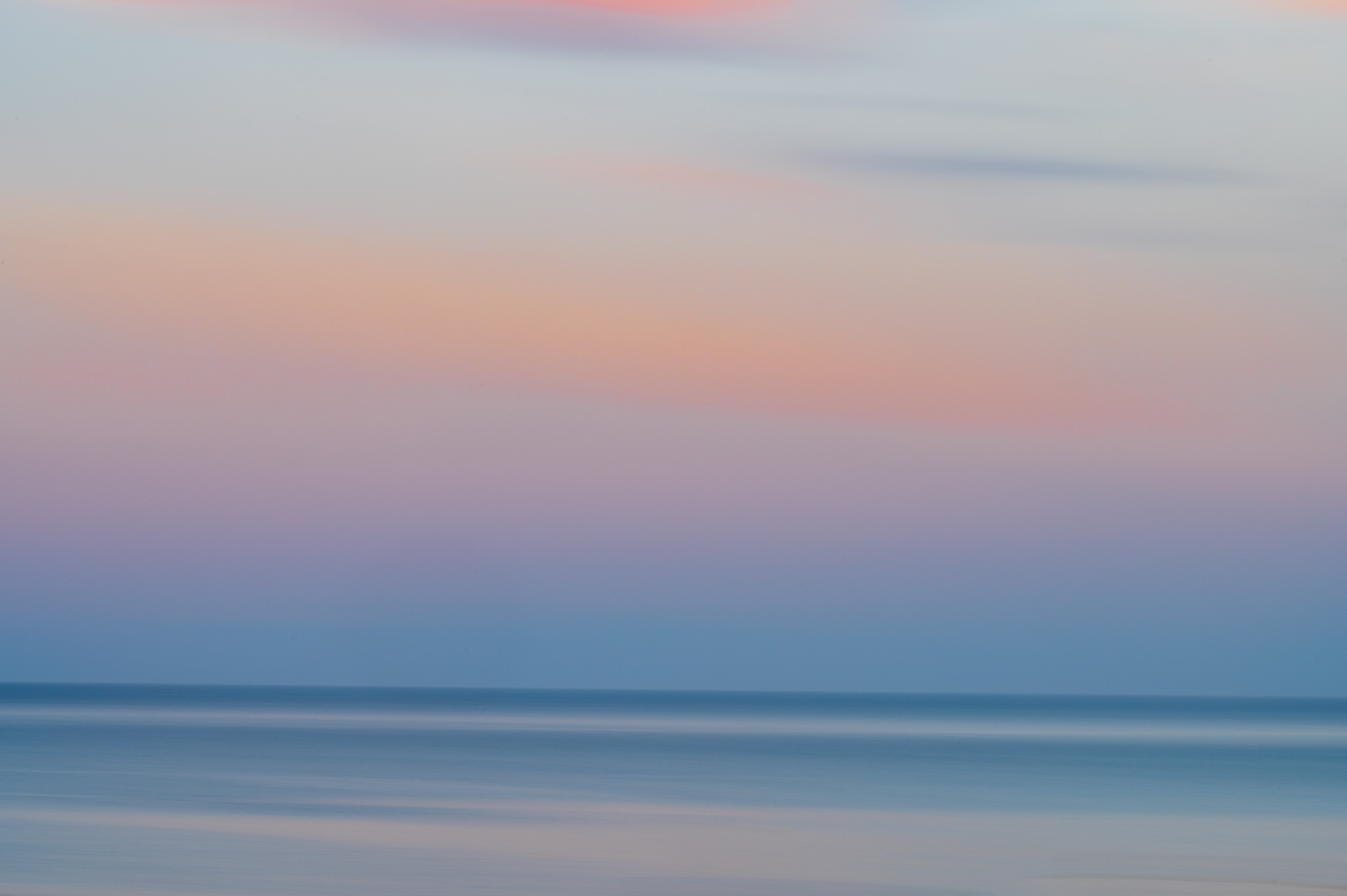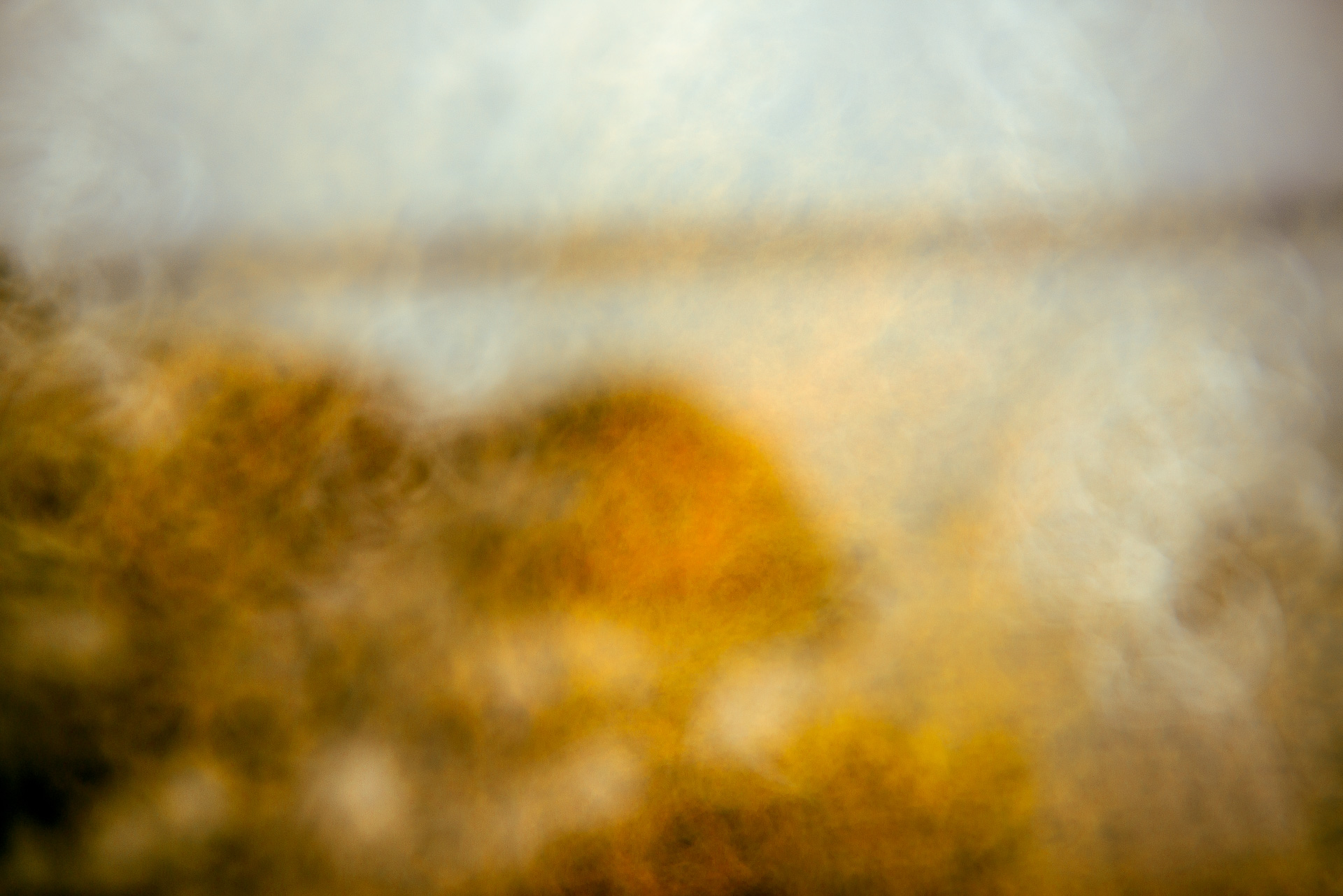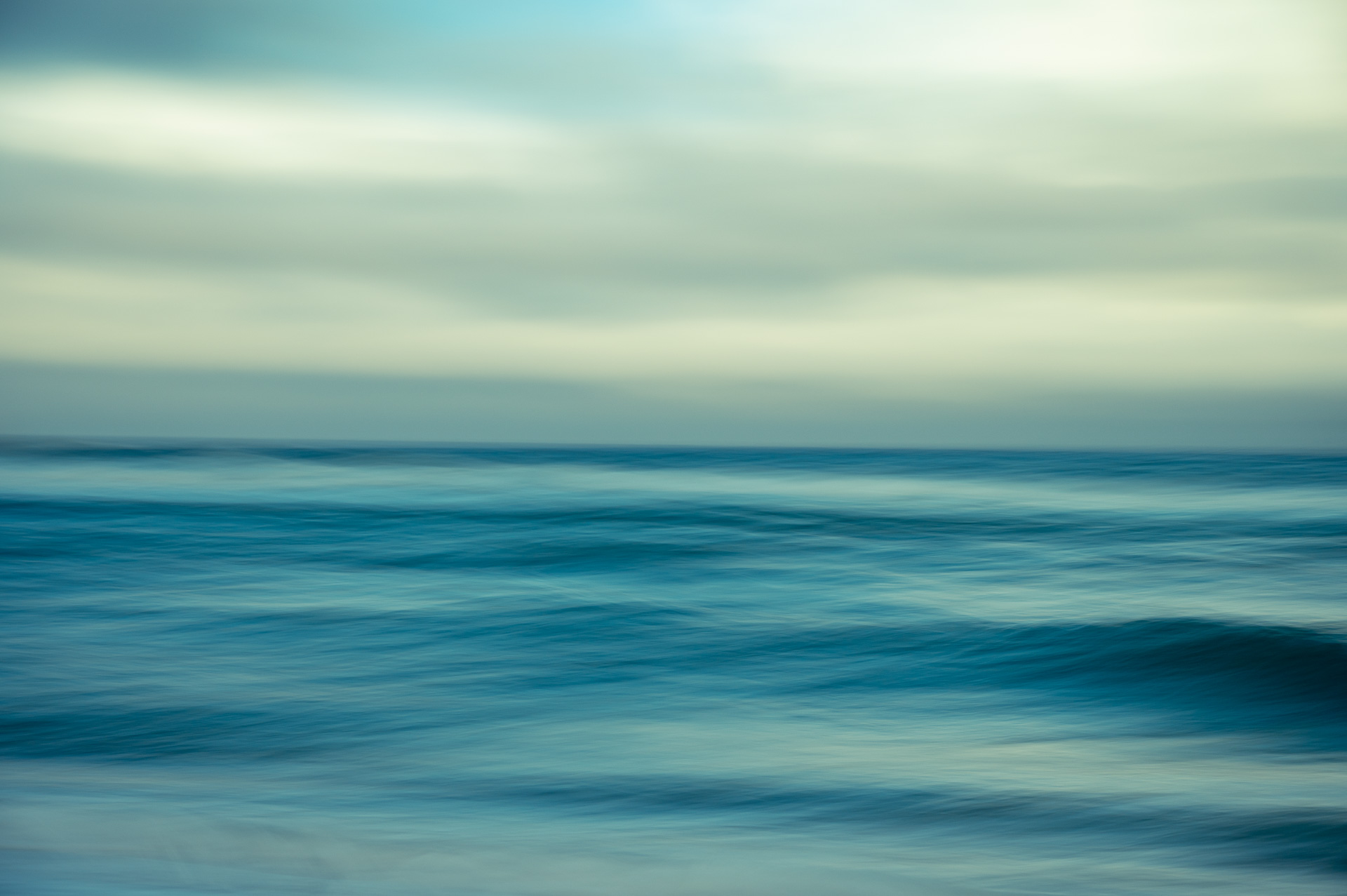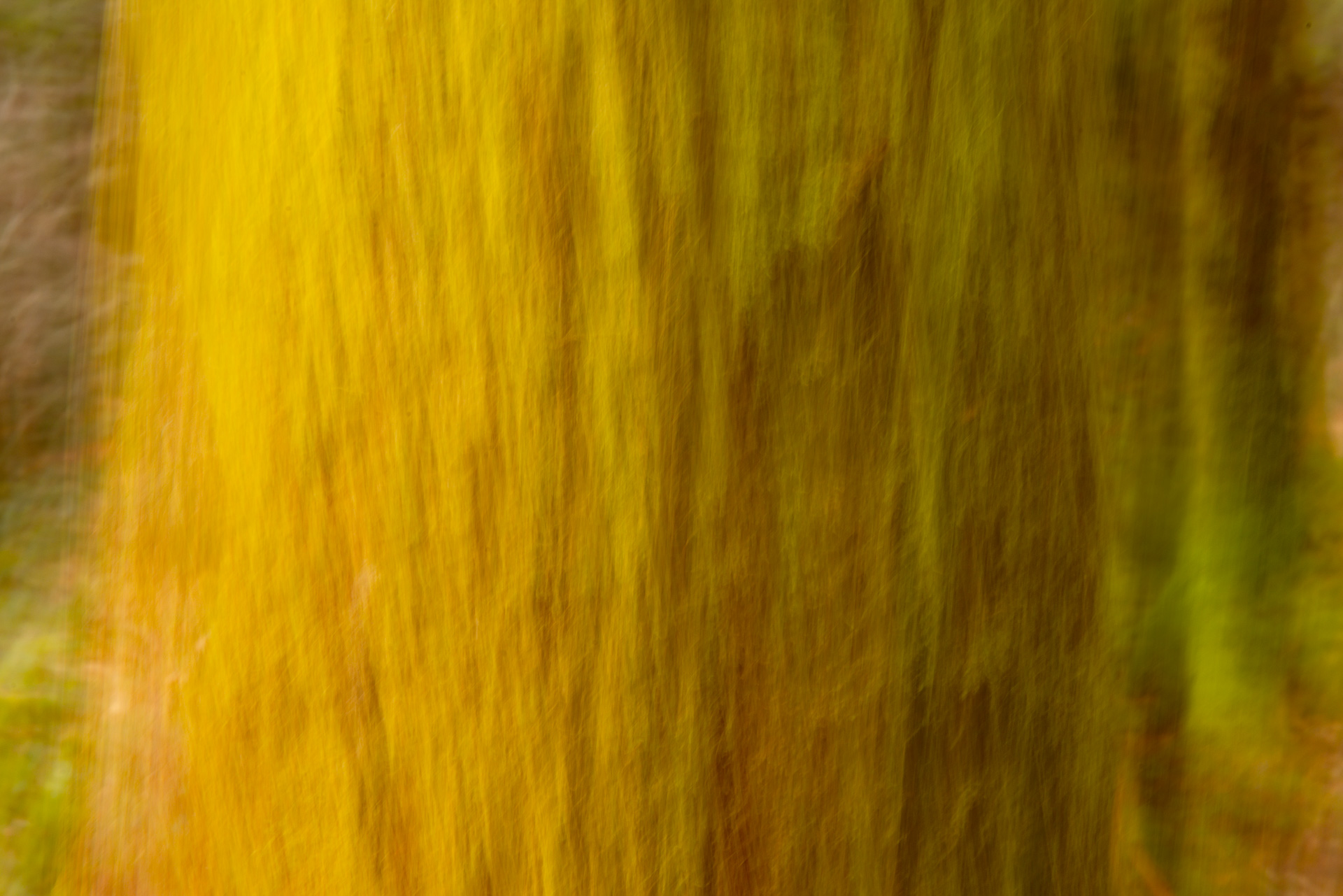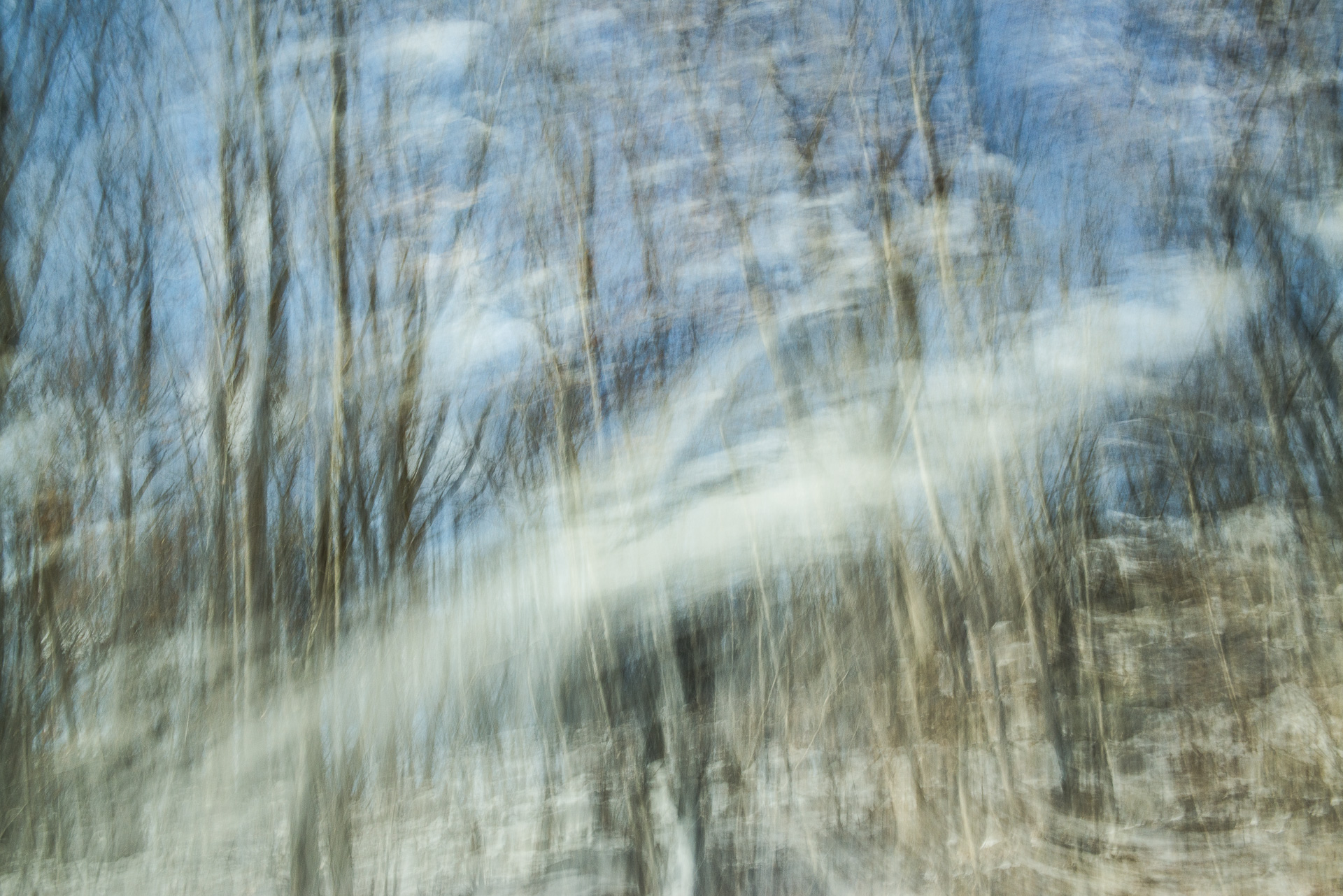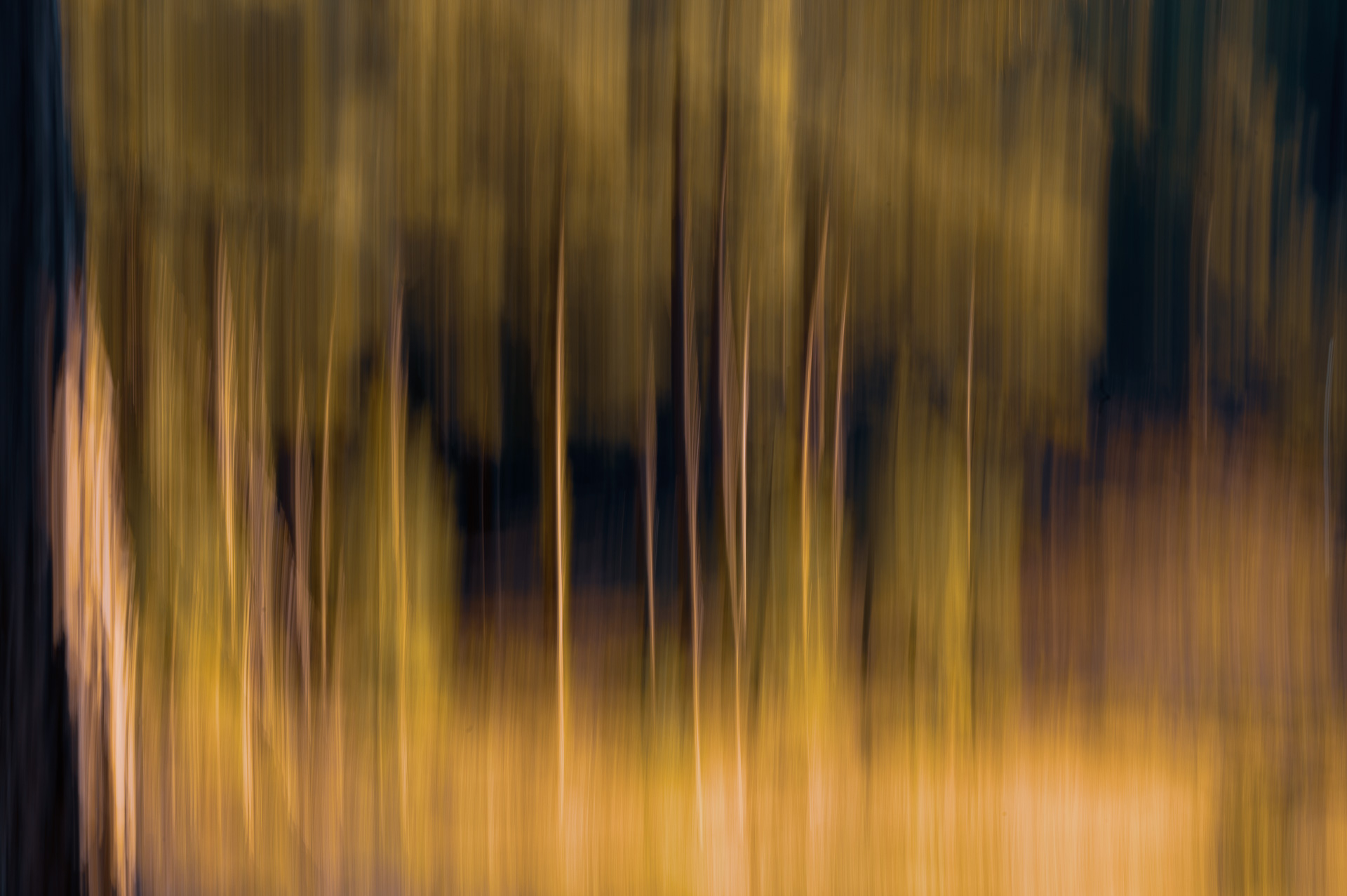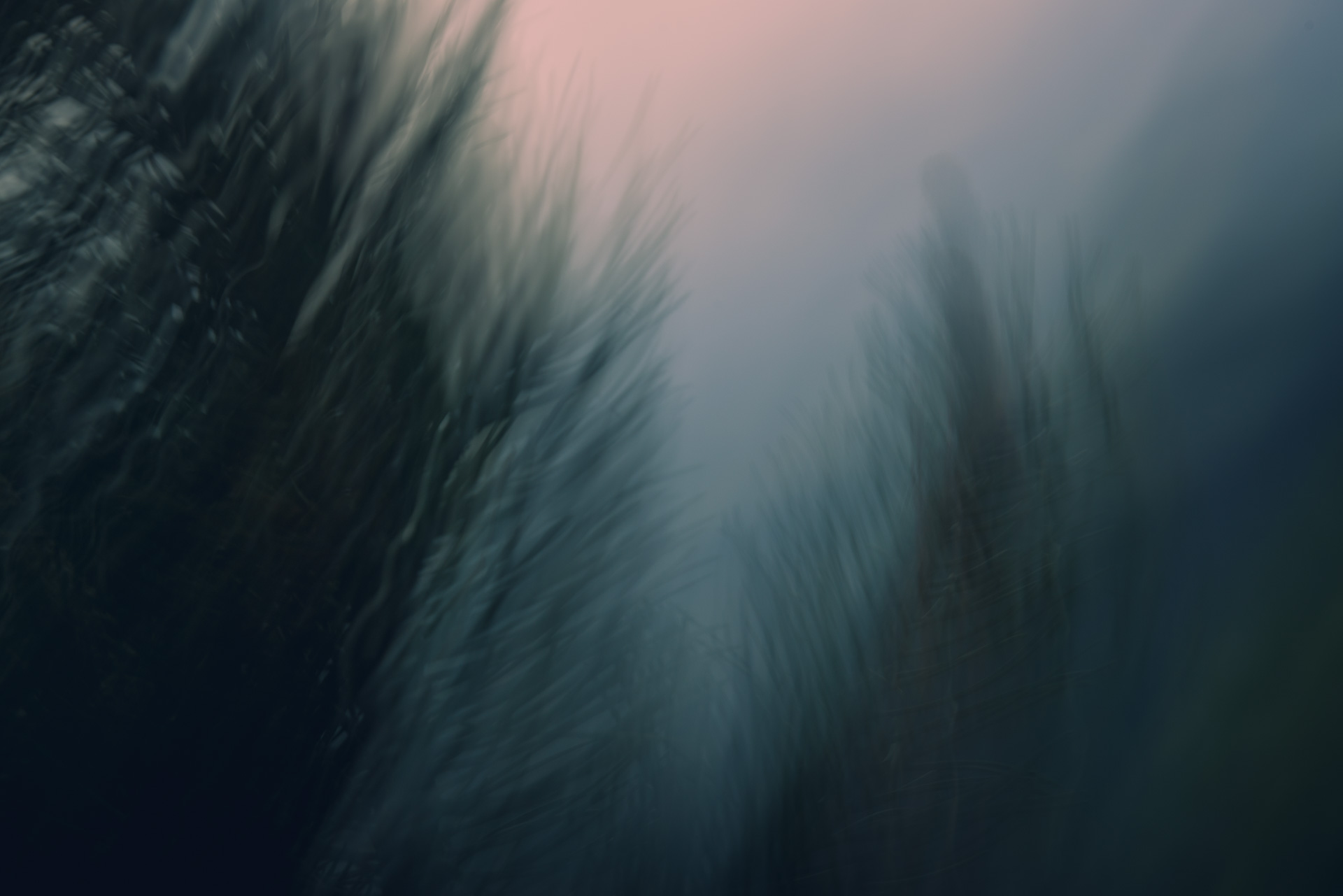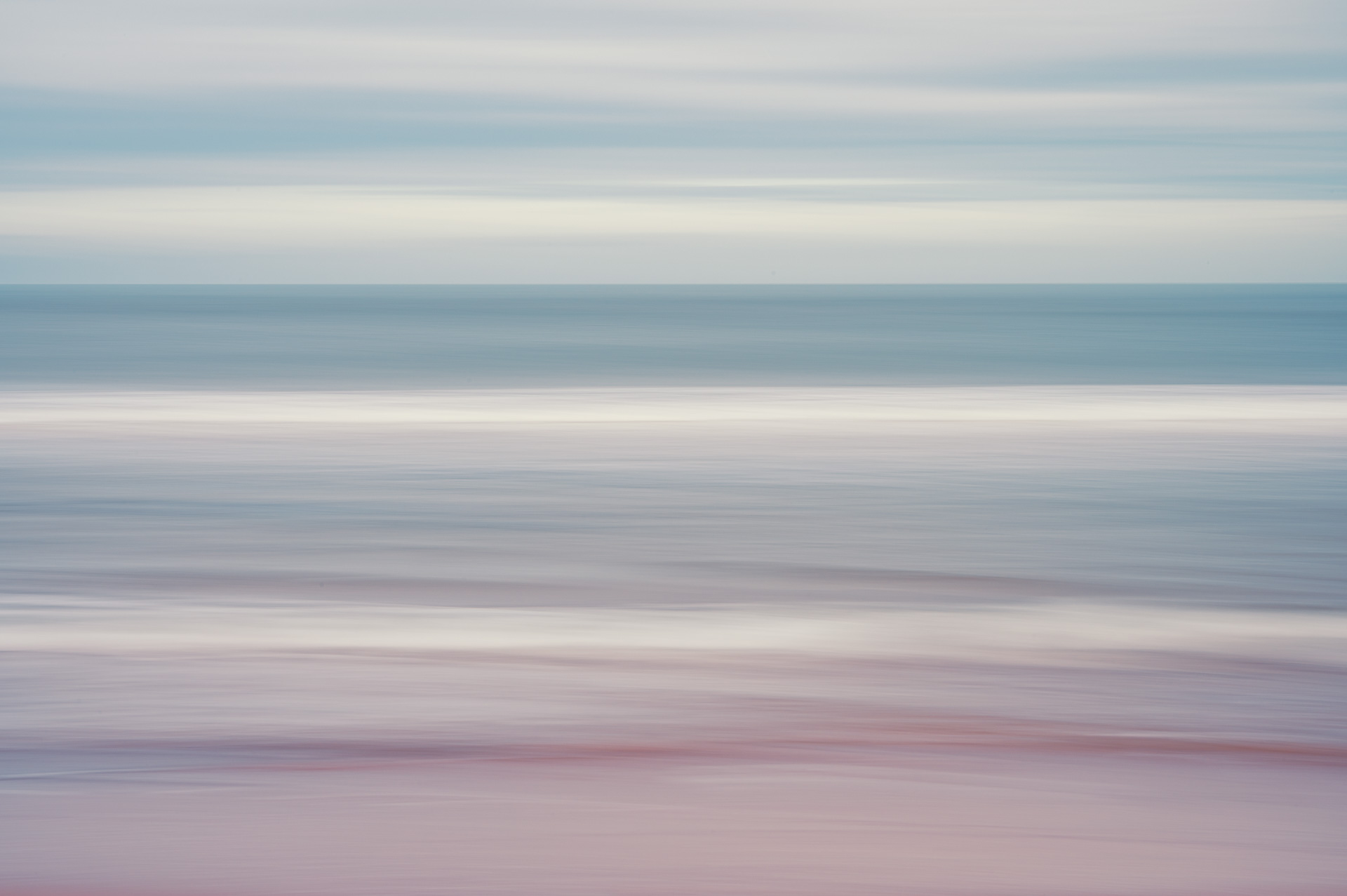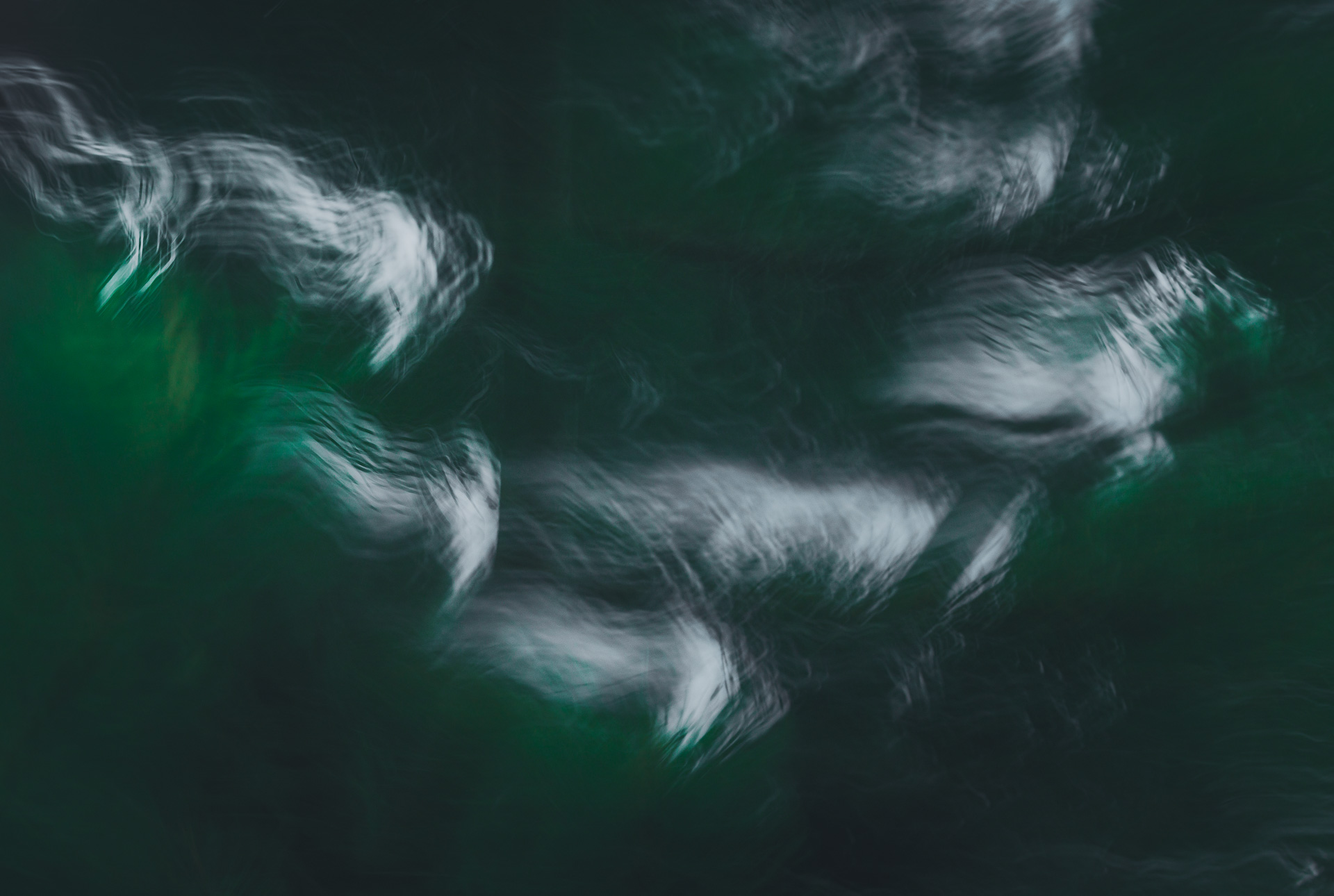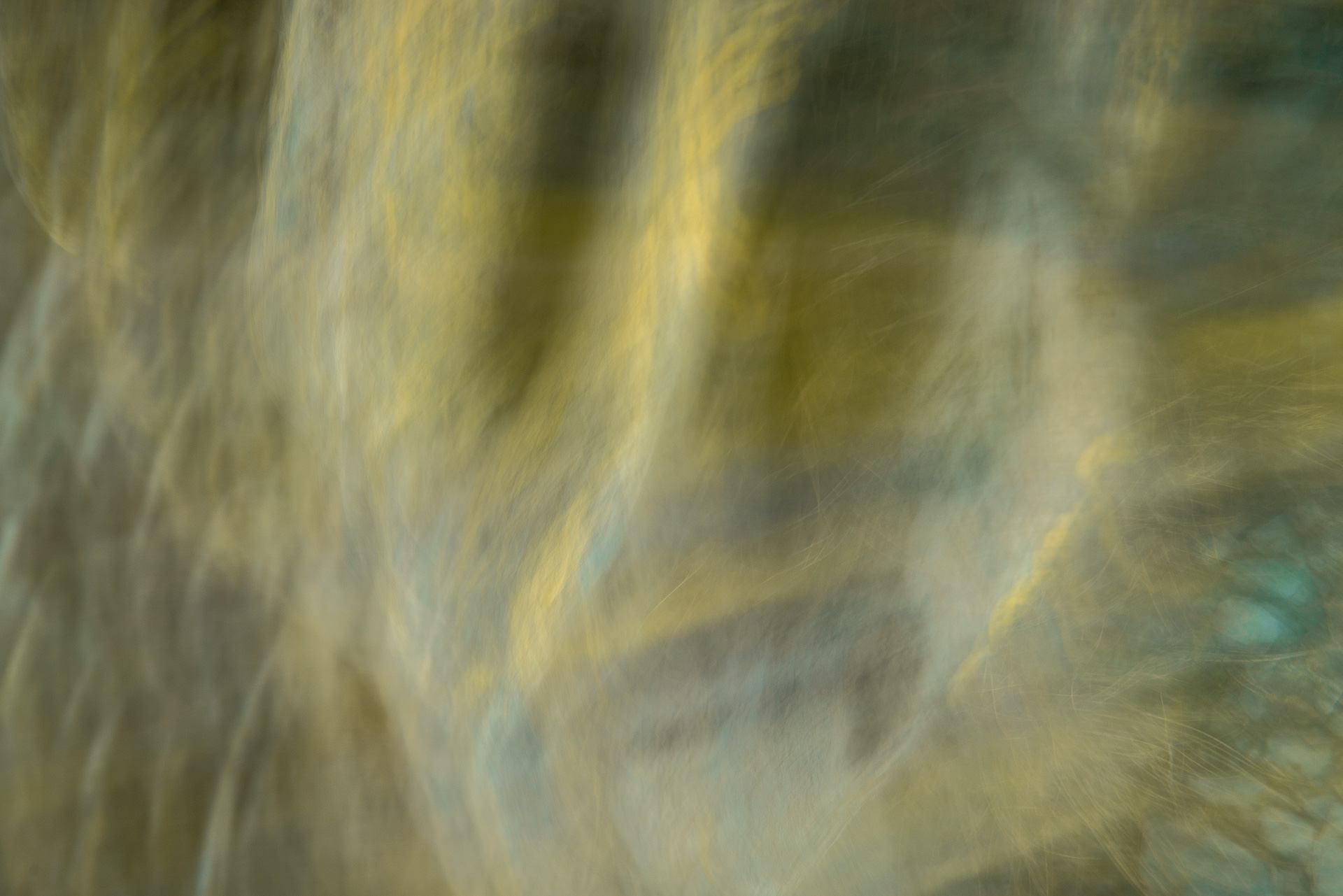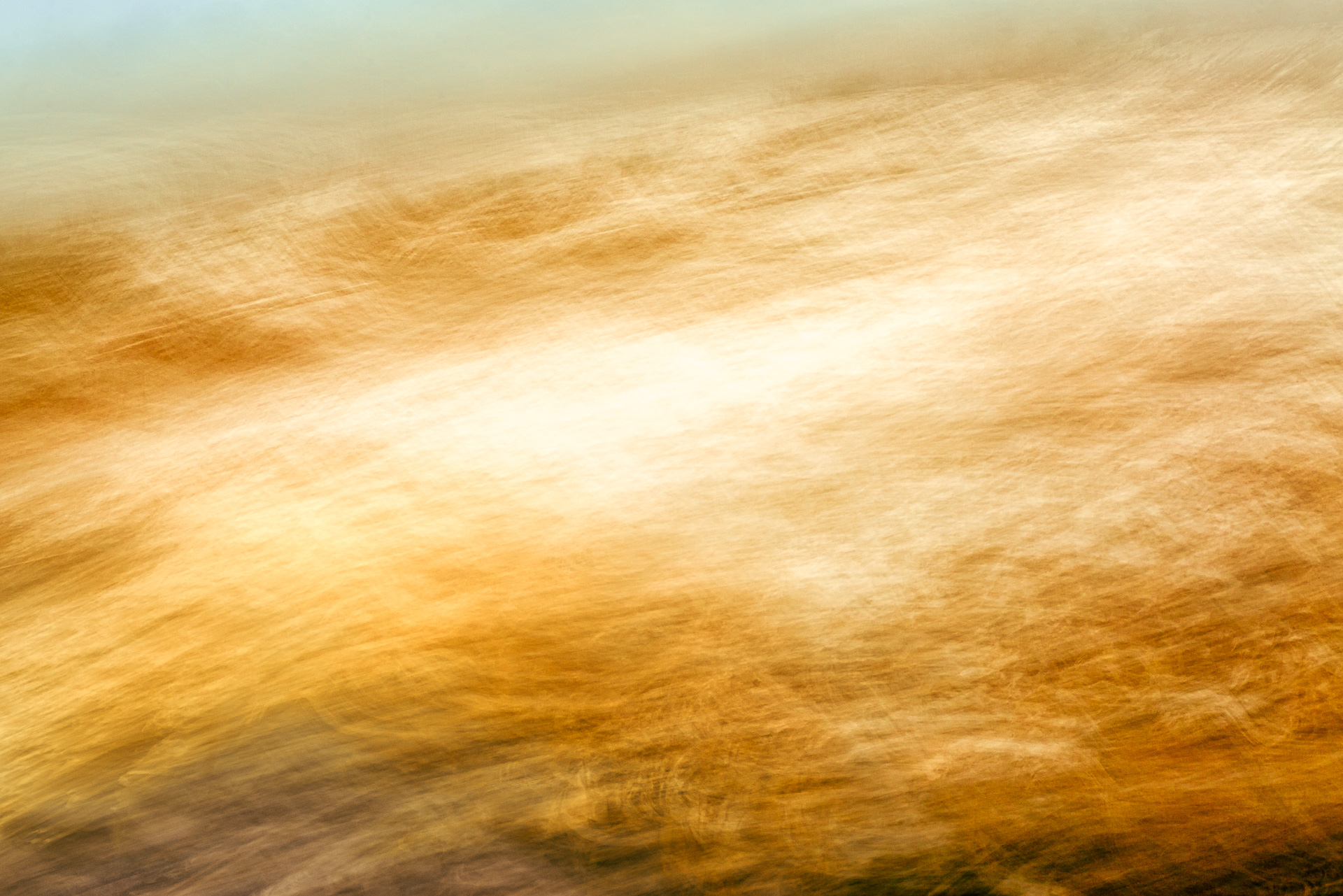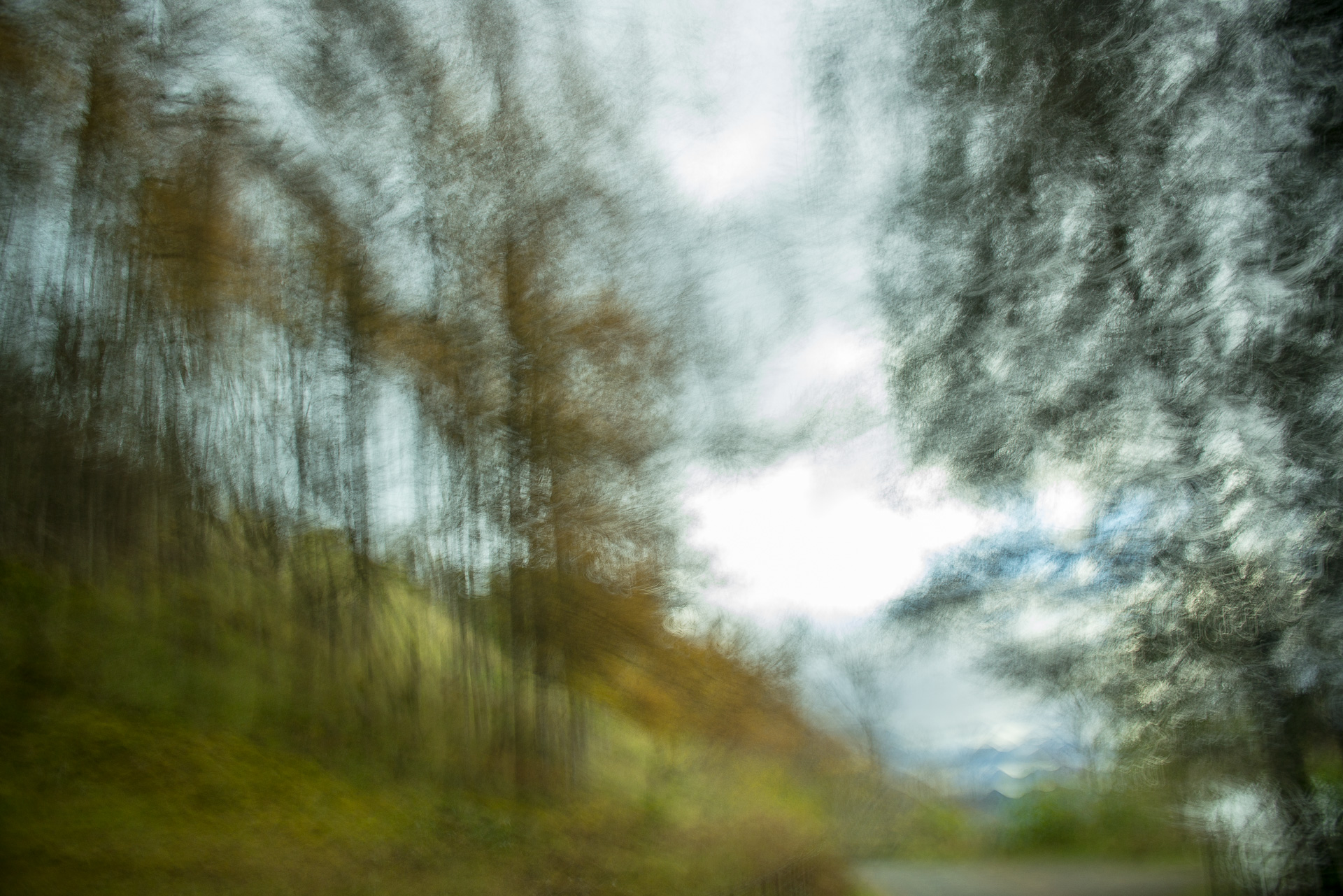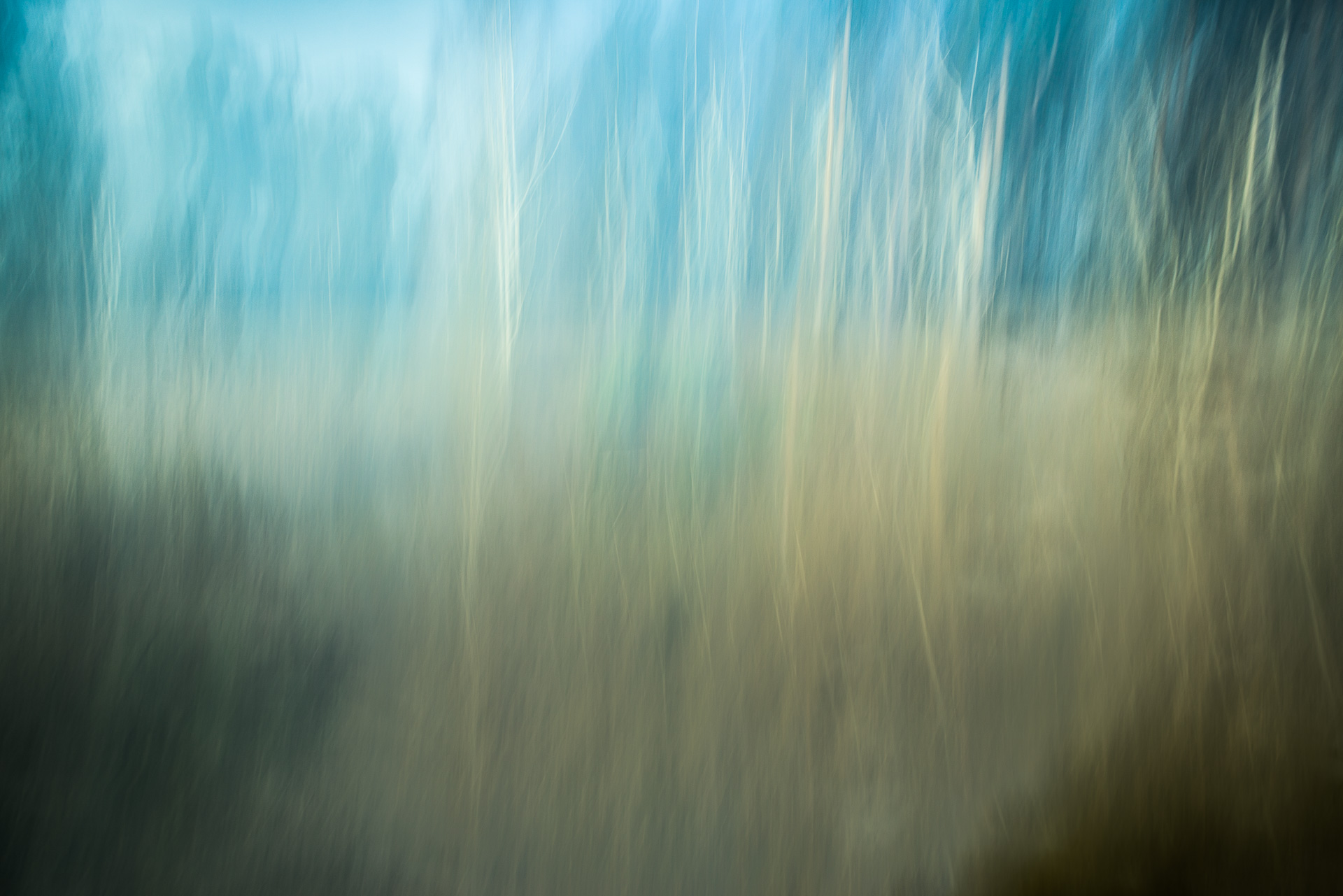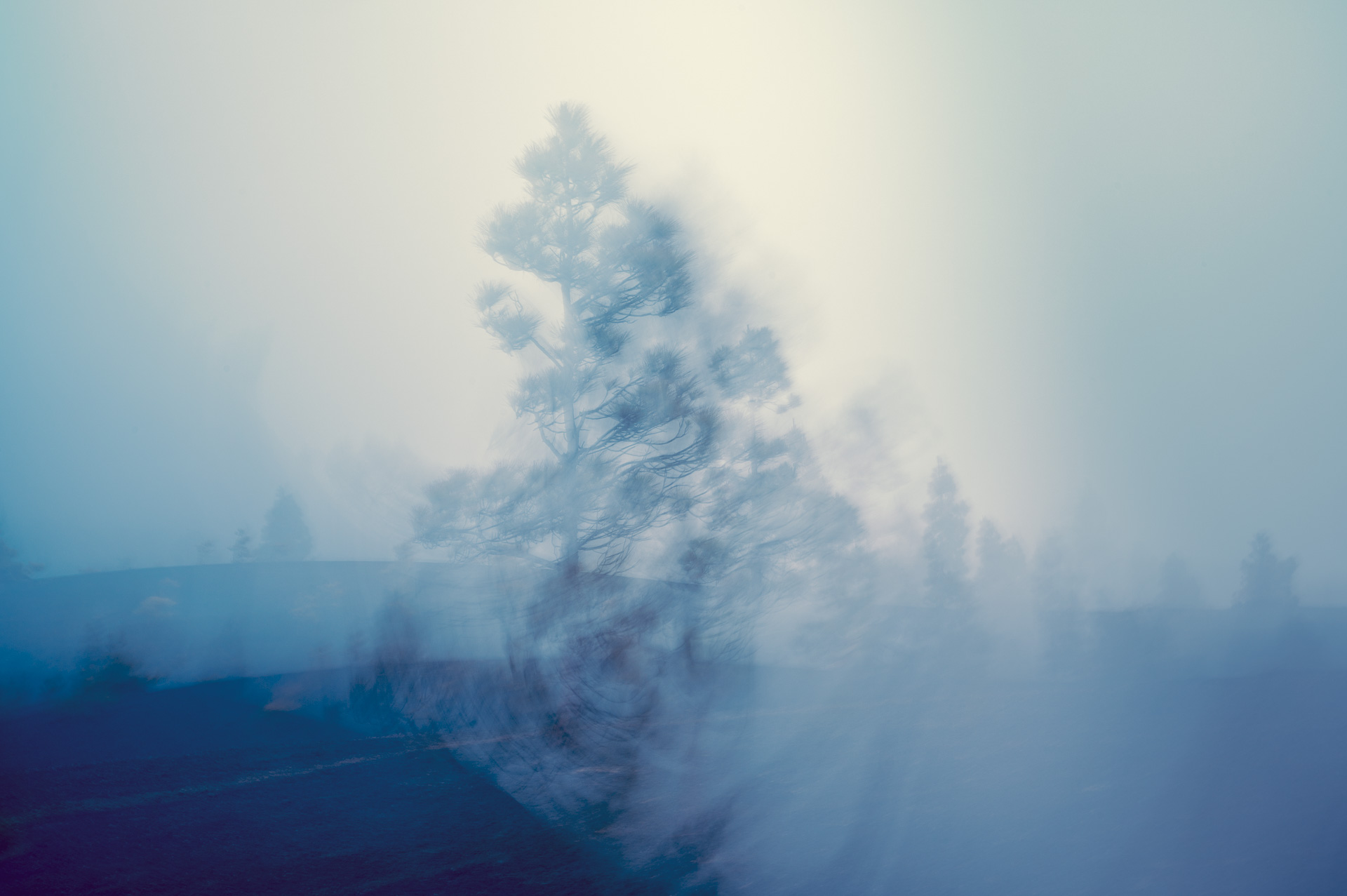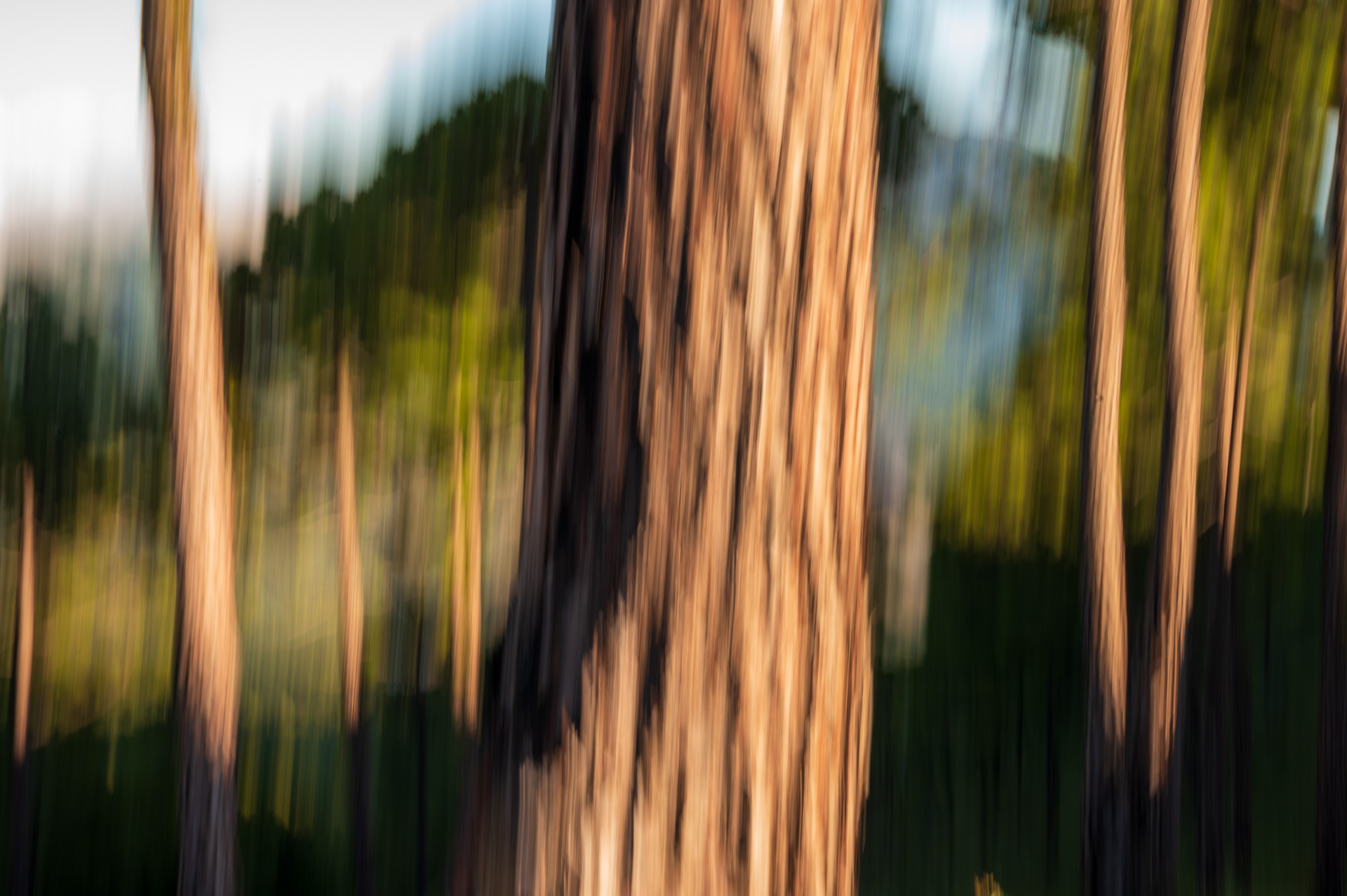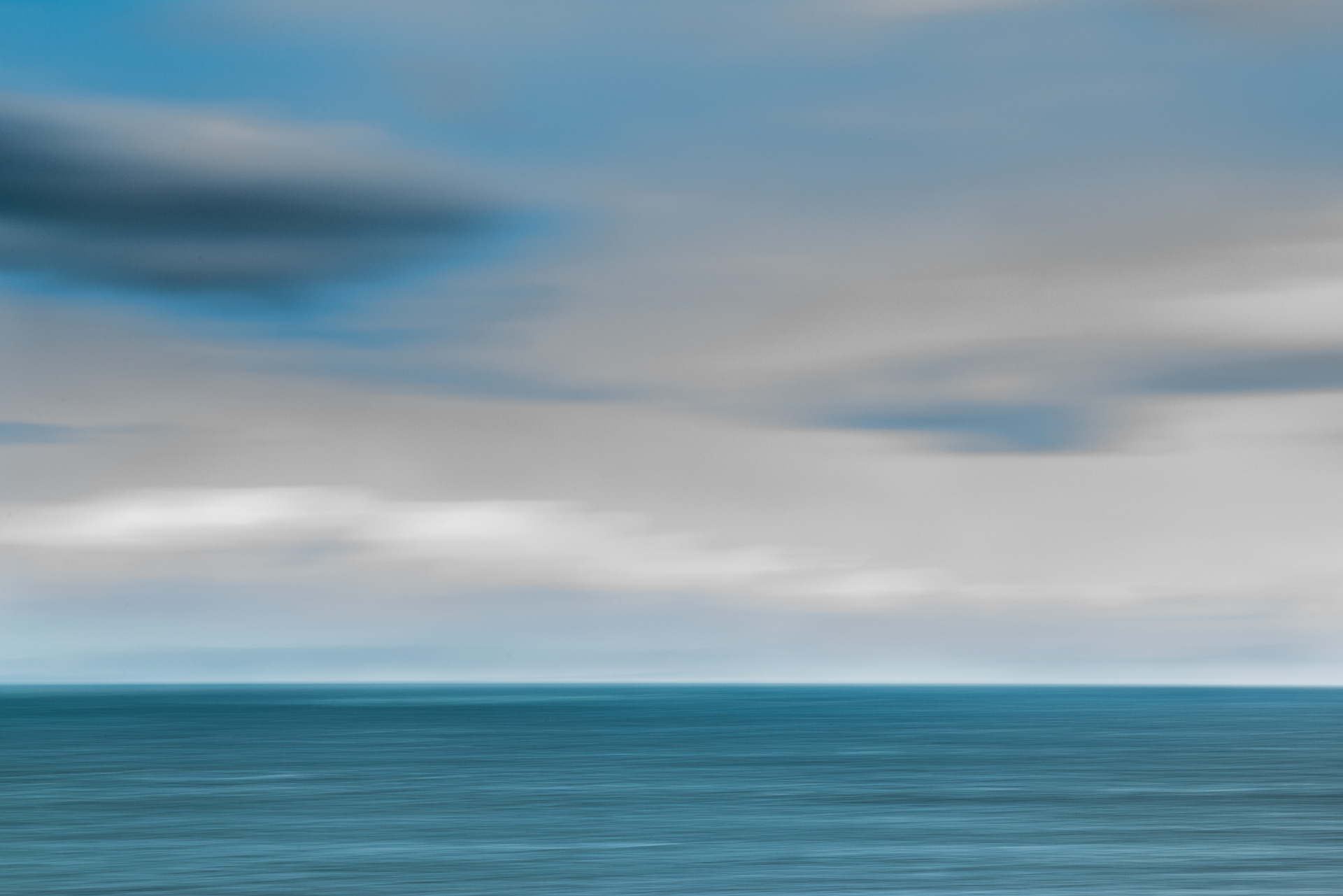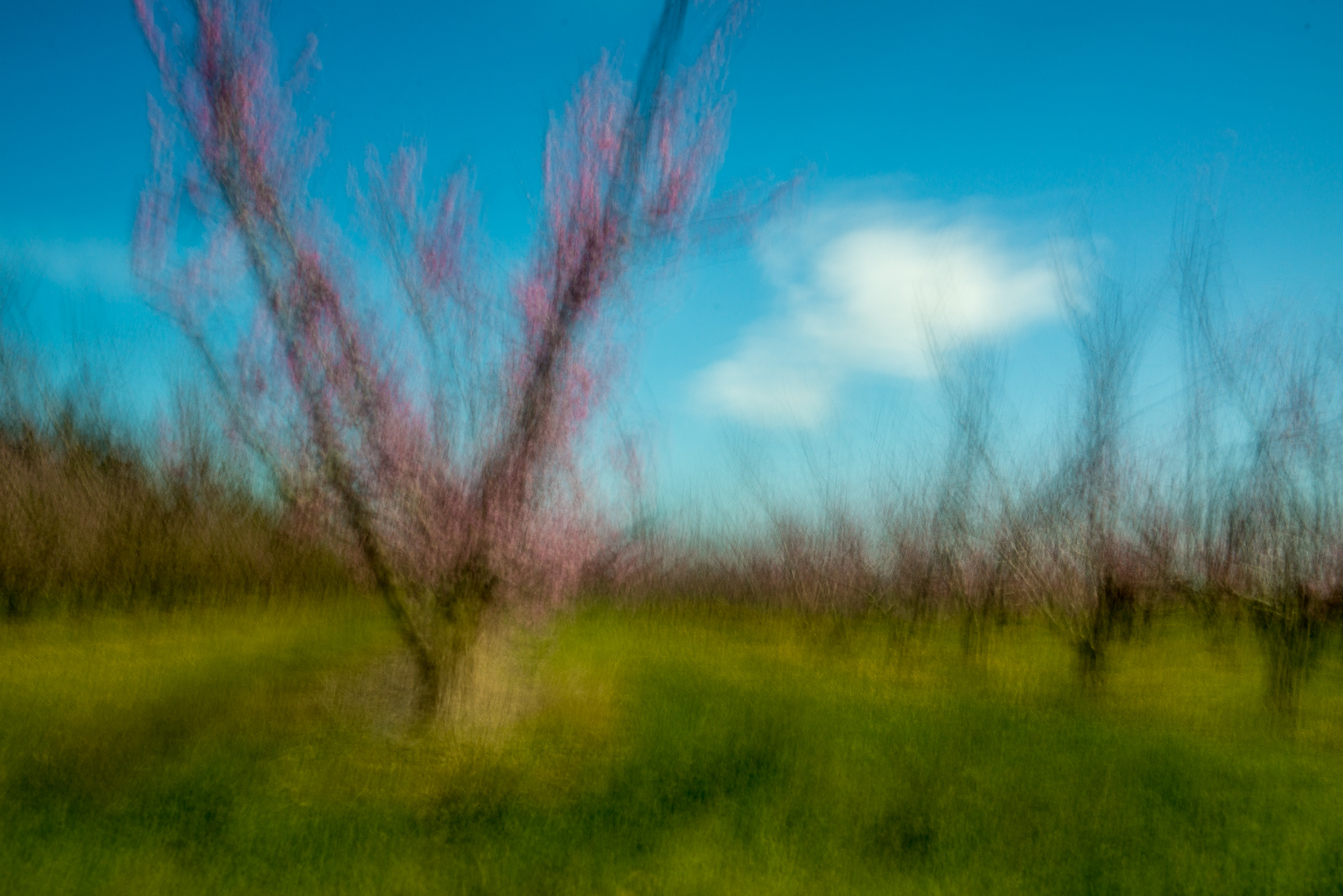
Playing with movement and slow exposures was my instinctive approach when I first picked up a camera. Initially, my lens mainly pointed at reflective surfaces, using them to capture my own image in fragmented, distorted forms as a way to explore my identity and relationship with the world. Less often I would play with motion in open spaces. At some point I realised that these quieter moments spent outdoors offered me something I didn't know I needed at the time: a sense of calm and meaning amid the noise of daily life. Creating in nature was what my body was asking for. My images evolved into diffuse impressions of the sensations particular places evoked in me, like an imperfect memory that lingers after the moment has passed.
At first, I didn't have a name for this type of images. My only certainty was that being outdoors and moving at the time of taking the photo were essential, so to organise my archive I started labelling them “fluid nature”. It felt like a freer kind of landscape photography, one where the impermanence of sensations, motion and the passing of time were weaved together with the natural elements.
I deepened in this practice most meaningfully through The Hebridean Trace, a series that emerged during a winter-long journey through the Isle of Skye and the Outer Hebrides in Scotland, where I travelled to from Spain on a small-engine scooter on my first solo adventure on two wheels. The rawness and dynamism of the weather, the weight of the kilometres held in the body, combined with the landscape's impactful beauty, moved me in ways it is difficult to find words for.
And that's where my Fluid Landscapes come from.